
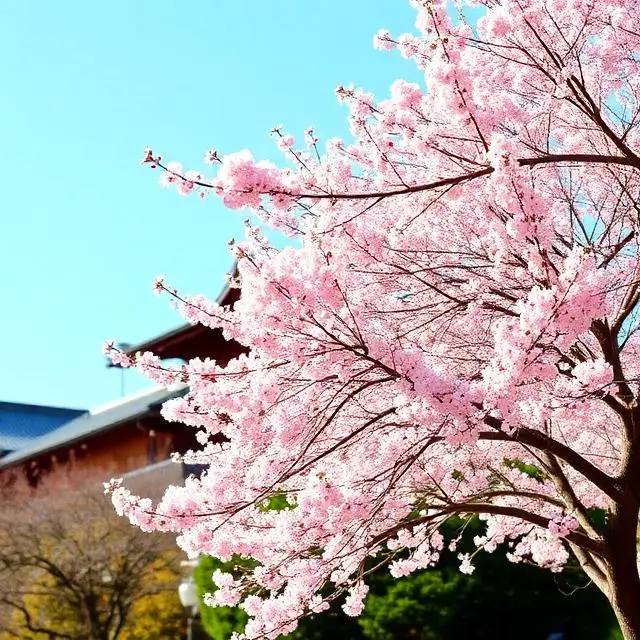
There’s a moment — sometime in late March — when Tokyo simply turns pink. Not gradually. Not politely. One day the branches are bare and grey, and then, almost overnight, every street, every canal, every train platform is framed by clouds of pale blossoms that weren’t there yesterday. The whole city holds its breath.
Cherry blossom season in Japan lasts about two weeks. That’s it. Two weeks between the first flowers opening and the last petals falling like snow onto the surface of rivers and park paths. The Japanese have a word for it — mono no aware — the bittersweet beauty of things that don’t last. And that impermanence is exactly what makes it so extraordinary.
Millions of people travel to Japan every spring to see it. But sakura season isn’t something you just look at. It’s something you feel — in the cool air, in the light filtering through petals, in the sound of families laughing under the trees. It’s one of those rare travel experiences that lives up to every photograph you’ve ever seen of it. And then exceeds them.
The forecast — when to go in 2026
Cherry blossoms don’t arrive on a fixed date. They follow the weather — specifically, the temperatures through winter and early spring. Every year, the Japan Meteorological Corporation tracks the “sakura front” as it sweeps north from Kyushu to Hokkaido over the course of about six weeks.
For 2026, the forecast is earlier than usual. Tokyo’s first flowers are expected around March 19, with full bloom — the moment when most trees are at their peak — predicted for March 27 to 28. Kyoto follows about a week later, reaching full bloom around April 1. Osaka is similar, peaking in the final days of March. Fukuoka, in the south, blooms almost simultaneously with Tokyo.
If you’re arriving later, don’t worry. The season moves north. Sendai in Tohoku peaks around mid-April. Sapporo in Hokkaido doesn’t hit full bloom until late April — sometimes not until early May. Japan’s geography means that somewhere in the country, cherry blossoms are always about to happen.
This is where having data on your phone changes everything. Live bloom-tracking apps — Sakura Navi is the best — show you in real time which spots are at peak, which are still budding, and which are already past their best. The difference between arriving at a park at perfect peak and arriving two days late can be the difference between a pink canopy and bare branches with petals on the ground.
Tokyo — the pink city
Start at the Meguro River. More than 800 cherry trees line both sides of a narrow canal in central Tokyo, their branches reaching across the water to form a tunnel of blossoms. During peak bloom, the surface of the river is carpeted with fallen petals — a phenomenon called hanaikada, flower rafts. It’s the single most photographed sakura spot in Japan, and for good reason.
Walk to Chidorigafuchi, the moat beside the Imperial Palace. You can rent a rowing boat and drift beneath the cherry trees that arch over the water. At night, they’re illuminated — yozakura, night blossoms — and the reflections on the dark water are hypnotic.
Shinjuku Gyoen is the calmer alternative. This national garden charges a small entrance fee, which keeps the crowds manageable, and its collection includes early and late-blooming varieties, extending the window by a week or more in either direction. Bring a blanket, buy an ekiben lunch box from the station, and sit under the trees. That’s hanami — the art of flower viewing — and it’s as simple as it sounds.
For the full festival atmosphere, Ueno Park is the place. Hundreds of blue tarps spread under the trees, groups of friends and colleagues sharing food and sake, children running between the blossoms — it’s joyful, loud, and completely unpretentious. Nobody is trying to be aesthetic. They’re just enjoying themselves.
And for something quieter? Try Yanaka Cemetery in the old shitamachi district, where a long avenue of cherry trees creates a tunnel of pink above the graves. Or Koishikawa Korakuen, one of Tokyo’s oldest gardens, where the blossoms reflect in a still pond surrounded by traditional architecture. Having Google Maps and train apps on your phone makes navigating between these spots effortless — Tokyo’s rail network can feel overwhelming on paper, but with live transit directions, it’s remarkably simple.
Beyond Tokyo — following the front
Kyoto is the cultural heart of sakura season. The Philosopher’s Path — a stone canal lined with hundreds of cherry trees — is one of the most beautiful walks in the country. Maruyama Park hosts Kyoto’s most famous weeping cherry, illuminated at night. And Arashiyama, with its bamboo groves and river temples, becomes something almost surreal when the hillsides bloom.
But Kyoto during sakura is also extremely crowded. Hotels book up six months in advance. If you want the atmosphere without the crush, consider Kanazawa — a smaller, elegant city on the Sea of Japan coast with one of the country’s finest gardens, Kenrokuen, which is spectacular in bloom. Or Takayama in the Japanese Alps, where cherry trees frame traditional wooden townhouses and morning markets.
For something genuinely extraordinary, make the journey to Mount Yoshino in Nara Prefecture. An entire mountainside planted with 30,000 cherry trees that bloom in waves from the base to the summit over the course of three weeks. Standing at the top, looking down at layers of pink fading into the valley below, is one of those views that makes you forget to take a photo. You just stand there.
And then there’s the bullet train. The shinkansen between Tokyo and Kyoto runs through countryside where cherry trees dot the landscape. If you time it right and the weather cooperates, you’ll catch a glimpse of Mount Fuji with cherry blossoms in the foreground — arguably the most iconic image of Japan.
The art of hanami
Hanami isn’t a formal event. There’s no ticket, no dress code, no reservation. You find a spot under a tree, sit down, and eat. That’s the entire tradition — and it’s been going on for over a thousand years.
The best hanami spots fill up early. In popular parks, groups send someone ahead in the morning to lay down a tarp and claim a patch of ground. By late afternoon, the parks are full — families, couples, office workers still in suits, university students with portable speakers. Convenience stores stock special hanami bento boxes and sakura-flavoured snacks during the season.
A few things to know: bring your rubbish with you when you leave — there are almost no public bins in Japan. Don’t step on other people’s tarps. And don’t shake the branches to make petals fall for a photo. The trees are old, often decades or centuries old, and they’re treated with genuine reverence.
The drinking is real, though. Hanami is one of the few contexts in Japan where drinking outdoors is not just acceptable but expected. Cans of beer and bottles of sake appear as naturally as the blossoms themselves. Nobody gets messy. It’s cheerful, warm, social — and it’s the closest you’ll get to the real, unfiltered version of how Japanese people spend their spring.
Night blossoms — yozakura
Some cherry blossom spots are illuminated after dark, and the effect is completely different from daytime viewing. The trees glow against the night sky, petals catching the light like confetti suspended in mid-air. The crowds thin out. The temperature drops. The whole mood shifts from festive to contemplative.
Chidorigafuchi in Tokyo is the classic yozakura spot. Nakameguro along the Meguro River strings paper lanterns between the trees, turning the canal into a glowing pink corridor. In Kyoto, Kiyomizudera temple opens its grounds for evening illumination — the cherry trees lit against the backdrop of the ancient wooden stage is something you won’t forget.
Night viewing is also more practical than you’d think. The parks don’t close. The trains run until midnight. And if you’ve spent the day sightseeing, an evening stroll under the lit blossoms is the perfect way to end it. Just bring a jacket — late March evenings in Japan hover around 8 to 12 degrees.
Practical tips for sakura season
Book accommodation three to four months ahead, minimum. During peak bloom, hotel prices in Tokyo and Kyoto surge by 50 to 100 percent, and many sell out entirely. Consider staying in Yokohama or Osaka as bases — they’re close enough by train and significantly cheaper.
Get a Japan Rail Pass if you’re travelling between cities. The shinkansen network connects Tokyo, Kyoto, Osaka, Hiroshima, and beyond, and a 7-day pass pays for itself after a single round trip.
Layer your clothing. Late March in Japan is unpredictable — warm sunshine one hour, cold wind the next. A light jacket you can tie around your waist is essential.
And set up your eSIM before you fly. Airport SIM counters in Japan are efficient but have queues during sakura season. With an IbiPoint eSIM installed before departure, you land at Narita or Haneda with data already active — maps, translation, bloom trackers, and transit apps all working from the moment you step off the plane. No rental Wi-Fi device to carry, no contract to sign. Just connection, instantly, across all of Japan.
The petals fall
There’s a final stage of sakura season that most people don’t talk about, but it might be the most beautiful of all. Sakurafubuki — cherry blossom blizzard. When the wind picks up and the petals begin to fall in earnest, the air fills with pink. They swirl around you like warm snow. They settle on your shoulders, in your hair, on the surface of your coffee. The ground turns pink. Rivers run pink. Even the light seems pink.
It lasts a day, maybe two. And then the trees are green, and spring is properly here, and the whole thing is over until next year.
That’s the thing about cherry blossom season. You can’t save it. You can’t extend it. You can only be there for it — standing under a canopy of flowers that won’t be there next week, in a country that understands, better than anywhere else on earth, that the things that don’t last are the things worth paying attention to.
The blossoms are opening right now.
Planning a sakura trip? Talk to IbiPoint Support — we’ll help you pick the right plan so you can focus on the blossoms.