
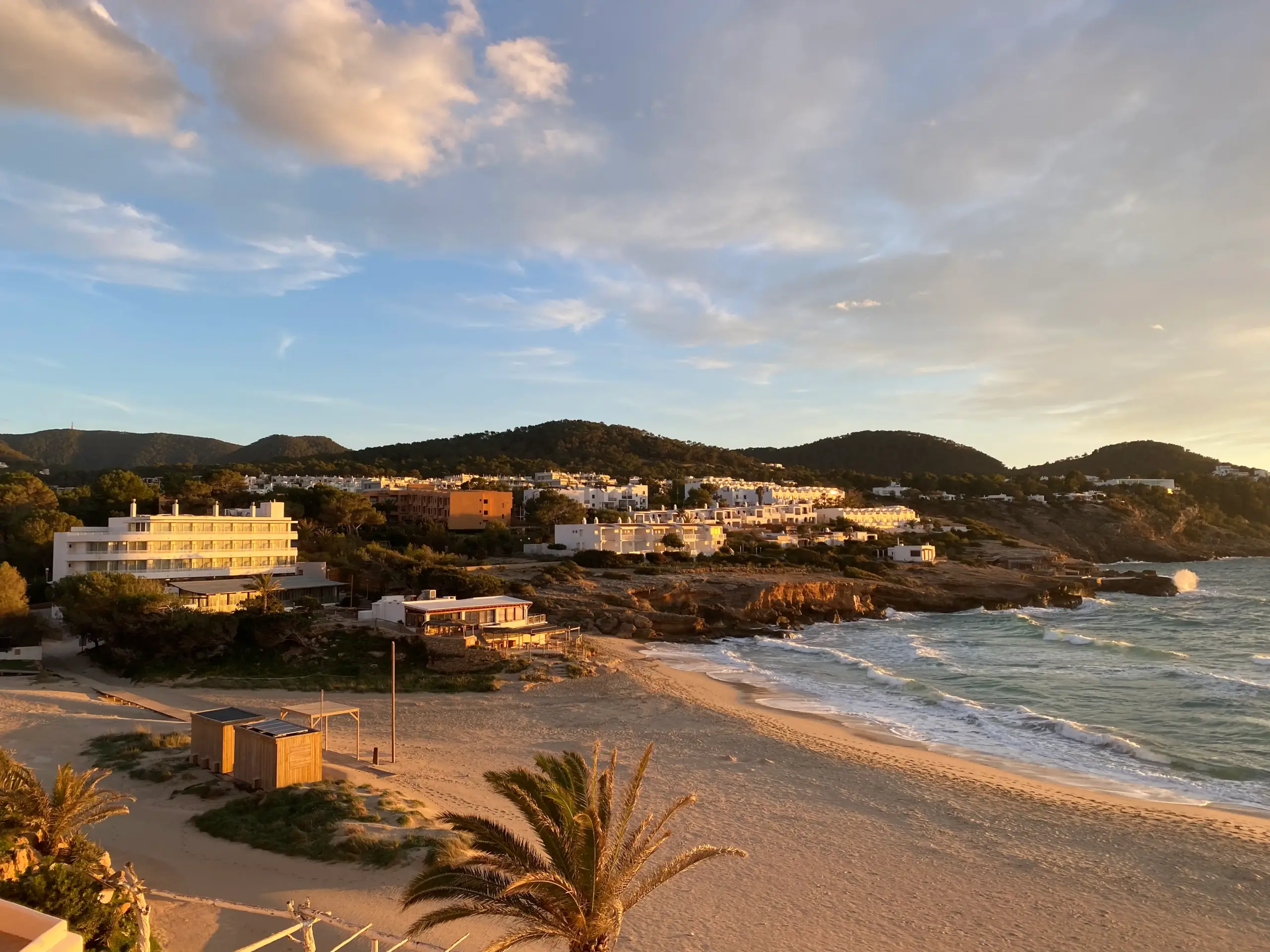
The default European holiday goes like this. You book in July or August because that’s when you have time off and that’s when everyone goes. You arrive in Rome or Barcelona or Santorini and discover that everyone else had the same idea. The Colosseum queue wraps around itself. The restaurant you read about has a two-hour wait. The hotel that looked so charming online costs €220 a night, and the room faces a wall. It’s 38 degrees. Your feet hurt. You’re spending a fortune to stand in lines with a million other people who are also spending a fortune to stand in lines.
There is a better version of this trip. Same places, same flights, same sights. But quieter, cooler, cheaper, and — this is the part that’s hard to believe until you’ve done it — more beautiful. It exists in the weeks that bookend the peak: May, June, and September. The travel industry calls it the shoulder season. Everyone who’s tried it calls it the obvious move they wish they’d made years earlier.
What shoulder season actually means
Europe’s tourism calendar has a sharp peak. It starts in late June when schools break up across the Northern Hemisphere, spikes through July and August, and drops off a cliff in mid-September. Everything — flights, hotels, museum queues, restaurant availability, beach space — follows this curve. Prices and crowds climb together, plateau for eight weeks, and fall together.
The shoulder season sits on either side of that spike. Late April through mid-June on the front end, September through mid-October on the back. The weather in these windows, across most of southern and central Europe, is not a compromise. It’s arguably better. May in the Mediterranean means 24 to 28 degrees — warm enough for the beach, cool enough to walk all day without heatstroke. September means the sea has had all summer to warm up, the light turns golden and long, and the air loses the oppressive edge that makes August in Athens feel like standing inside an oven.
The crowds are thinner by a factor you have to see to appreciate. The Uffizi in May has morning slots available the day before. The Uffizi in August is sold out three weeks ahead, and when you get in, you’re looking at paintings through a wall of phone screens. Santorini’s caldera path in June has space to stop and breathe. In August, it’s a single-file queue with selfie sticks. Same island. Same path. Entirely different experience.
The money argument
Here’s where the shoulder season stops being a nice idea and becomes an obvious one. A two-week trip through southern Europe — Italy, Greece, maybe a few days in Croatia — costs $4,000 to $6,000 per person in July and August. Flights, hotels, dining, trains, ferries, museum tickets. In May or September, the same itinerary comes in at $2,500 to $3,500. Not a different trip. The same trip.
Flights from North America drop 20 to 35 percent outside the July-August window. Hotels in popular cities — Rome, Barcelona, Lisbon, Dubrovnik — run 30 to 50 percent less when the peak-season demand disappears. A room that costs €200 a night in Positano in August goes for €110 in May. A beachfront apartment in Crete that’s €180 in July lists at €90 in September. These aren’t lesser rooms. The view hasn’t changed. The breakfast is the same. The only difference is timing.
Dining is the same price year-round — Europe doesn’t surge-price its restaurants — but your experience of it improves dramatically. The trattoria in Trastevere that has a 90-minute wait on a July Saturday? Walk-in table on a Wednesday in May. The seaside taverna in Mykonos with the sunset view? In September, you get the table. In August, you get the one by the kitchen door.
The savings compound across every category. Car rentals drop. Ferry tickets drop. Even Airbnb cleaning fees feel less insulting when the nightly rate is half what it was six weeks later. A couple saving $1,500 on a two-week trip can use that to add a third week — or pocket it and come back next year.
Italy — the masterpiece, without the queue
Nowhere in Europe illustrates the shoulder-season advantage more clearly than Italy. This is a country that receives over 60 million tourists a year, the vast majority of them between June and August. The infrastructure groans. Venice floods with people before it floods with water. The Amalfi Coast road becomes a car park. Rome’s historic centre operates at a density that makes sightseeing feel like commuting.
In May, the same country is almost unrecognisably pleasant. Rome at 25 degrees, with morning light on the Forum and no queue at the Pantheon. Florence’s Ponte Vecchio with space to stop and lean on the railing. The Amalfi Coast before the road chokes — Positano’s terraced streets still quiet enough to hear the sea. Cinque Terre’s hiking paths open but not shoulder-to-shoulder. Tuscany’s hills covered in poppies and young wheat, the kind of landscape that made the Renaissance painters reach for their brushes.
September brings a different beauty. The vendemmia — grape harvest — rolls across Tuscany, Piedmont, and the Veneto. Vineyards glow amber and gold. Village festivals celebrate the harvest with food, wine, and a level of local warmth that July’s tourist crush never sees. The Dolomites, which are a madhouse of hikers in August, thin out to manageable trails with the first hint of autumn colour.
Sicily and Sardinia, Italy’s two great islands, are at their best in May-June and September-October. Warm enough to swim, uncrowded enough to find a beach to yourself, and cheap enough to eat fresh seafood at the harbour every night without wincing at the bill. The beach clubs that charge €40 for a sunbed in August? Half that, or free, in the shoulder weeks.
Spain and Portugal — before the heat
Southern Spain in August is hot. Not pleasantly warm — genuinely, dangerously hot. Seville hits 42 degrees. Córdoba hits 44. Madrid bakes. The locals leave. The tourists who replace them wilt.
In May and June, Andalusia is 26 to 30 degrees and everything is still green from the spring rains. The Alhambra’s gardens are in full bloom. Seville’s orange trees line the streets. Córdoba’s patios — the famous flower-filled courtyards — host their annual festival in early May, one of the most photogenic weeks in all of Europe. By August, the flowers have burned off and the courtyards are too hot to enjoy.
Barcelona works beautifully in May. The beaches are swimmable, La Boquería market isn’t a rugby scrum, and Park Güell has enough space to actually sit and look at the view that Gaudí intended. The Basque Country — San Sebastián, Bilbao — peaks in June, with its pintxos bars at full strength and its coastline sparkling without the August surf-school invasion.
Portugal might be the single best shoulder-season destination in all of Europe. Lisbon in May is perfect — 22 to 25 degrees, endless light, the city’s hills walkable without the August sweat. The Algarve’s beaches and cliffs are gorgeous and available. Porto’s Douro Valley is green and lush, and the port lodges in Vila Nova de Gaia have time for a proper tasting instead of the assembly-line treatment they offer in peak season. Even the Azores — Europe’s most underrated islands — sit in a sweet spot from May to June: whale season, hydrangea blooms, volcanic landscapes without another tour bus in sight.
Greece — the window everyone misses
The Greek island fantasy — white villages, blue domes, turquoise water — is sold as a July and August experience. That’s when the photographs look like, and that’s when the package holidays run. It’s also when Santorini’s caldera path is a human traffic jam, Mykonos’s bars charge €18 for a beer, and the Meltemi wind can ground ferries for days.
May and June in Greece are different in every way that matters. The sea is cool but swimmable. The hillsides are green and dotted with wildflowers — by August they’ve baked brown. The Cyclades are at their photogenic peak: whitewash gleaming, bougainvillea blooming, sunsets unobstructed by cruise-ship passengers. Ferries run on schedule because the Meltemi hasn’t started. Taverna owners have time to recommend, to explain the menu, to bring you a free dessert because you’re the only table.
September and early October bring the best swimming of the year. The Aegean has had four months of sun and sits at 25 to 26 degrees — bathtub warm. The Meltemi has died down. Crete’s south coast, the Pelion peninsula, Rhodes, Naxos — all of them peak in September for anyone who wants to actually be in the water rather than just look at it. Accommodation drops to a fraction of August rates, and the late-afternoon light on the Aegean is the kind of gold that painters have chased for centuries.
Athens itself — often treated as a transit point to the islands — is worth two or three days in the shoulder season. The Acropolis at sunrise in May, without a tour group in sight, is one of those moments that reminds you why you travel at all. The Plaka neighbourhood, the Monastiraki flea market, the rooftop bars with their Parthenon views — all of it works better at 26 degrees than 38.
Croatia and the Adriatic — the coast without the cruise ships
Croatia’s Adriatic coast has a cruise ship problem in July and August. Dubrovnik — one of the most beautiful walled cities on earth — receives thousands of day-trippers from ships that dock just outside the walls. The Stradun, Dubrovnik’s main street, becomes impassable. Split’s Diocletian’s Palace fills to capacity. Hvar’s harbour turns into a superyacht car park.
In May and June, the cruise traffic is a fraction of its peak. Dubrovnik’s walls catch morning light with nobody on them. Split’s palace — a living, working neighbourhood where people hang laundry between Roman columns — feels like a place instead of a set. The islands — Hvar, Brač, Korčula, Vis — are warm enough to swim by late May and blissfully quiet compared to the August version of themselves.
September is Croatia’s secret weapon. The sea is 25 degrees. The islands are emptying out. The light is long and amber. And the oysters — Ston, on the Pelješac Peninsula, produces some of the best in the Mediterranean — are in season. You can drive the coastal road from Dubrovnik to Split in September and stop at beaches, villages, and waterfront restaurants that would have required a reservation and a fight for parking eight weeks earlier. Now they’re just there, waiting.
The north — a different kind of magic
Southern Europe gets most of the shoulder-season attention, but northern Europe in May and June has something no other season can offer: the light.
Scandinavia from late May through June is a revelation. Stockholm’s archipelago — 30,000 islands — glows under 18 hours of daylight. Copenhagen’s canals and waterfront come alive with outdoor dining that locals have been waiting all winter for. Norway’s fjords are at peak drama: waterfalls fed by snowmelt, wildflowers on the hillsides, the midnight sun turning everything gold at hours that should be dark.
The Netherlands in late April and May needs no explanation — it’s tulip season. But beyond the obvious, Amsterdam in May is the city at its most liveable: cycling weather, canal-side terraces, the Rijksmuseum without the summer queue. The countryside is flat, green, and perfect for cycling between villages that feel barely touched by tourism.
Germany and Austria come into their own in September. The word Altweibersommer — old wives’ summer — describes the stretch of warm, golden days that often arrives in early autumn. Munich’s Oktoberfest begins in late September. Vienna’s wine taverns (Heurigen) pour the new vintage. The Black Forest, the Rhine Valley, the Bavarian Alps — all of them peak in the golden weeks before the first frost.
France deserves its own mention. Provence in late May — lavender not yet in full bloom but the poppies and wildflowers covering every field — is perhaps the most beautiful corner of Europe. The Côte d’Azur in June, before Cannes and Nice become a wall of sunburnt bodies. Normandy and Brittany, often overlooked, hit perfection in late May and June: dramatic coasts, seafood platters at harbour restaurants, D-Day beaches with the emotional weight they deserve rather than the carnival atmosphere of August.
What to eat in the shoulder months
Europe’s shoulder season aligns with some of the best eating of the year. Spring and early autumn are harvest seasons, and the food follows.
May in Italy means artichokes in Rome, fresh peas in Venice, and the first tomatoes of the year appearing on every table. June brings stone fruit — cherries, apricots, peaches — at a quality that supermarket produce will never match. September is grape harvest in Tuscany, mushroom season across the continent, and the start of game season in France, when menus shift toward cassoulet, confit, and the hearty dishes that define French country cooking.
Spain’s shoulder months bring the best of its market culture. Spring sees fava beans, artichokes, and the first gazpachos made from freshly picked tomatoes. September means the vendimia — the grape harvest — and with it, wine festivals from Rioja to Ribera del Duero. Portugal’s sardine season peaks in June, when Lisbon’s Santos Populares festival fills the streets with the smell of charcoal-grilled sardines, and the whole city eats them standing up, with cold beer and bread to catch the oil.
Greece in May and June offers wild greens (horta), fresh fava purée, soft cheese, and lamb at its spring best. The tavernas that serve simple food brilliantly — grilled fish, village salad, bread with olive oil — are better in the shoulder season simply because the chef isn’t cooking for 200 covers a night. The pace slows, the quality rises, and the bill stays modest.
Practical tips for the shoulder season
Pack layers. Mornings and evenings in May can be cool, particularly in northern and central Europe — a light jacket and a scarf solve most temperature swings. Southern Europe by mid-May is warm enough for short sleeves by 10 a.m. September is the reverse: warm days, cooler evenings. Either way, you’re carrying less than the July traveller who needs nothing but sunscreen and patience.
Book accommodation earlier for May and September than you would for off-season — these months are increasingly popular, and the best places sell out. But you’ll still have far more availability than July or August, and at better prices. Look for refundable bookings; the shoulder season rewards flexibility.
Trains are the way to move. Europe’s rail network connects the major destinations more comfortably and often more cheaply than flying, and in the shoulder season, the trains aren’t packed. A Eurail pass or point-to-point tickets on Trenitalia, Renfe, or SNCF give you flexibility that budget airlines can’t match. Book high-speed trains (Paris to Marseille, Rome to Florence, Barcelona to Madrid) a few weeks ahead for the best fares.
Check opening hours. Some attractions, particularly on Greek islands and smaller Mediterranean towns, operate on reduced schedules in May and October. Most places are fully open by mid-May, but it’s worth confirming before you plan your day. A quick search on your phone settles it — another reason to have data working from the moment you arrive.
And connectivity matters more than people think. Google Maps navigating a medieval town centre. Translation apps in a rural Portuguese market. Train apps for last-minute schedule changes. Restaurant bookings at the place you just walked past. An IbiPoint eSIM covers the entire continent on a single plan — activate it before you fly, and it works across every border. No swapping SIM cards between countries, no carrier shops, no roaming surprises. Just data, everywhere, from the moment you land. In a region with 44 countries, dozens of languages, and transport networks that run on mobile apps, a phone that works isn’t optional. It’s the thing that turns a good trip into a great one.
The shoulder season state of mind
There’s a version of Europe that only exists in these weeks. The light is different — longer and softer than summer’s harsh overhead blaze, the kind that turns sandstone golden and makes the sea look like it was painted. The pace is different — locals haven’t yet retreated behind the wall of professional hospitality that peak tourism demands, and you’re more likely to be treated as a guest than a transaction. The air is different — spring jasmine in May, harvest woodsmoke in September, neither one the flat, hot stillness of August.
You’ll notice it at the small moments. The museum guard who has time to tell you which room to visit first. The winemaker who invites you to taste because you’re the only visitors today. The beach that’s empty at 10 a.m. — not closed, not remote, just empty, because it’s May and the crowds haven’t arrived. The sunset from a terrace in Oia or Positano or Dubrovnik, watched with a glass of local wine and a plate of something simple and perfect, and nobody elbowing you for the view.
Peak-season Europe is a spectacle. Shoulder-season Europe is a conversation — with the places, the people, the food, the light. It asks less of your wallet and more of your attention, and it gives back more than you’d expect.
The flights are cheaper. The hotels have room. The terraces are open. Go now — while the calendar still says yes.
Italy eSIM Spain eSIM Greece eSIM Portugal eSIM Croatia eSIM France eSIM
Planning a European trip? Talk to IbiPoint Support — we’ll help you pick the right plan for your route so you can focus on the terrace, not the tariff.