
For most of the year, Japan looks like a country that goes to work. Trains move with quiet purpose. Office windows glow late into the night. The streets of Marunouchi and Umeda fill at 8 a.m. and empty again at 8 p.m. Then, for one week each spring, something shifts. The salaryman packs a bag. The schoolchildren are home. The shrines fill. The mountains open. The whole country goes outside at once.
This is Golden Week. Four national holidays in eight days, weekends folded in, an entire culture stepping away from its desks at the same time. It is the busiest week of the Japanese year, and it is also — if you do it well — one of the most photogenic and joyful windows the country offers. The weather is the best you will ever feel in Japan. The light turns long and clean. Carp streamers fly over every village. The sakura you missed in March is still blooming somewhere, if you know where to look.
What Golden Week actually is
The week is built from four holidays that the post-war calendar happened to place close together. Showa no Hi — Showa Day, 29 April — commemorates the birthday of the Showa Emperor and marks the start of the run. Kenpo Kinenbi — Constitution Memorial Day, 3 May — celebrates the post-war constitution that has shaped modern Japan since 1947. Midori no Hi — Greenery Day, 4 May — is a celebration of nature, originally tied to the Showa Emperor’s love of botany. And Kodomo no Hi — Children’s Day, 5 May — is the festival of family, koinobori, and the gardens of paper carp that fly over every river and rooftop.
With the weekends on either side, and a substitute holiday whenever a date falls on a Sunday, most Japanese workers end up with five to nine consecutive days off. Companies effectively close. Schools shut. Offices empty. Tokyo’s commuter trains, normally so packed that station staff push passengers through closing doors, run at half capacity. The Shinkansen southbound from Tokyo Station, on the other hand, becomes a single solid line of suitcases and grandparents and small children with packed bento, all heading home for the holiday.
It is the closest thing Japan has to a national exhalation. The country, as one, decides to stop.
The honest reality — what peak week means
This is the part the glossy guides skip. Golden Week is intense. Domestic flights between the major hubs sell out by February. Shinkansen reserved seats on the days surrounding 3 and 5 May go on sale exactly one month ahead and disappear within hours. The Hakone ropeway, Kyoto’s Arashiyama bamboo grove, and the Fushimi Inari shrine paths see queues that can stretch for an hour. Resort towns — Karuizawa, Hakone, Atami, Kusatsu — push prices to two or three times their normal rate, and the best ryokan have been fully booked since the previous autumn.
If you arrive expecting a quiet, contemplative Japan, peak Golden Week will surprise you. But it surprises in both directions. The same week empties Tokyo of its locals. Walking Roppongi or Shinjuku on the evening of 4 May, you will see streets that should be impossible at that hour — actually navigable, with restaurant tables free and bartenders with time to talk. Places that built their whole reputation on being impenetrable suddenly aren’t. The crowd has simply moved elsewhere.
The trick is to know which Japan you are choosing. The big tourist nodes — central Kyoto, Hakone, Mount Fuji’s Five Lakes, Universal Studios Osaka — will be crushed. The cities the Japanese leave behind will be unusually open. And the regions most foreign travellers never reach — Tohoku, Hokuriku, Shikoku, southern Kyushu — will be celebrating in ways the postcard version of Japan barely shows.
Tokyo — the city when the locals leave
Tokyo during Golden Week is a counterintuitive joy. The 14 million people who live and work in greater Tokyo do not all travel out, but enough of them do that the city’s pulse softens by perhaps fifteen percent. That fifteen percent is the difference between a packed escalator at Shibuya Station and one with space to stand. Between an hour-long wait at a ramen counter and a walk-in seat. Between never seeing a free bench in Yoyogi Park and having one to yourself.
The city’s parks are at their absolute best. Yoyogi, Shinjuku Gyoen, and Ueno are alive with families on picnic mats, kites in the air, and the season’s first iced matcha being served from kiosks. The fresh green of late spring — what Japanese culture calls shinryoku, the new green — is more striking than any single sakura. Trees explode into colour overnight. The Imperial Palace gardens, Rikugien, and Kiyosumi all peak in early May.
The art crowd benefits too. The Mori Art Museum, teamLab Borderless, and the Nezu Museum see a fraction of their usual traffic. The big seasonal exhibitions at the Tokyo National Museum and Roppongi’s 21_21 Design Sight time their rotations to take advantage of the locals being away — meaning serious shows, but no school groups and no after-work corporate visits filling the rooms.
And then there is the food. Tokyo’s restaurant scene runs on reservations made weeks ahead, and the spots that normally require a fight for a counter seat — the small omakase places in Yotsuya, the soba masters in Kanda, the standing-bar yakitori in Yurakucho — actually have walk-in availability during Golden Week, because their regular salaryman clientele is in their hometowns eating their mothers’ cooking. It is, briefly, the most accessible Tokyo of the year.
Kyoto, Nara, and the late spring
By Golden Week, the famous Kyoto sakura is two months gone. The cherry trees along the Philosopher’s Path are deep green. The crowds that descended in late March and early April have been replaced by a different crowd — Japanese families on holiday, with strollers and grandparents, walking the same paths but at a different pace.
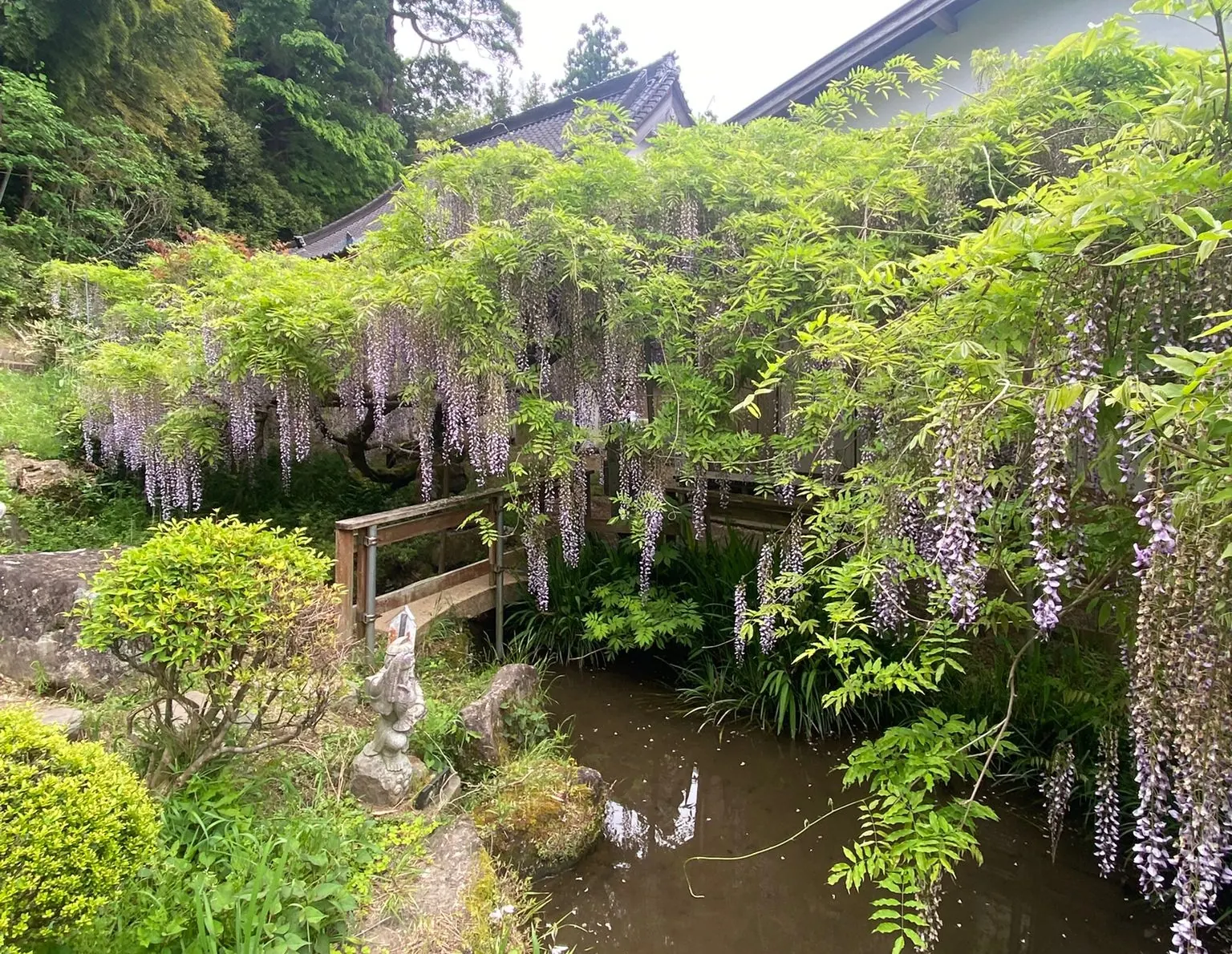
What replaces the blossom is, in some ways, more beautiful. The fresh maple leaves of Tofuku-ji and Eikan-do — what the Japanese call aomomiji, the green maple — flood every temple garden. By mid-May the wisteria at Byodo-in in Uji and the Ashikaga Flower Park (a few hours north of Kyoto) are at their world-famous peak: cascades of purple flowers hanging from trellises that have stood for over a century. The azalea gardens at Mimuroto-ji explode in pink and white. The peonies of Hasedera are at their best. None of this gets the sakura’s marketing budget, but flower for flower it rivals anything Japan offers in spring.
The smart move in Kyoto during Golden Week is to time your day. Famous spots — Fushimi Inari, Kinkaku-ji, Kiyomizu-dera, Arashiyama bamboo grove — should be visited at dawn or after 5 p.m. The middle of the day belongs to the day-trippers from Osaka. But the lesser temples — Daitoku-ji’s sub-temples, Honen-in, Shoren-in, Manshu-in — remain almost empty regardless of the calendar. The whole point of Kyoto, arguably, is that there are simply more good temples than tourists know to visit, and Golden Week makes the difference between the two starker than ever.
Nara, an hour away by train, is similarly underrated in early May. The deer in Nara Park are quieter than in autumn rutting season. Todai-ji’s Great Buddha Hall has space to actually stop and look. And the Yoshino mountain area, an hour further south, holds the last of the late-blooming sakura — varieties like yamazakura and yaezakura that flower a full three weeks after the urban ones.
The north — where the sakura is still blooming
This is the secret most foreign travellers miss. Japan’s cherry blossom front does not bloom all at once. It moves north up the country at roughly 30 km a day, starting in southern Kyushu in late March and reaching Hokkaido in early May. By Golden Week, the blossom is exactly where most Japanese tourists are not: in Tohoku, the long northern stretch of Honshu, and in Hokkaido itself.
Hirosaki Castle in Aomori Prefecture holds what is widely considered the most beautiful sakura festival in Japan. Two thousand five hundred trees ring a feudal castle and its moat, and from late April through the first week of May the petals fall onto the water in such density that the moat itself turns pink. The castle keep was recently moved, slowly and deliberately, off its original foundation for repair work, and it now sits at a slight angle on temporary blocks — a quiet, almost surreal sight surrounded by petals.
Kakunodate in Akita is another stop. A samurai district preserved almost intact, with weeping cherries arching over the dark wooden walls of nineteenth-century homes. The trees are old and dramatic, and the contrast against the black timber is photographed every spring by half the country.
Further north, in Hokkaido, the season runs about a week behind. Matsumae Castle on the southern tip is the gateway. The parks of Sapporo, the gardens of Hakodate’s Goryokaku star fort, the small town of Niseko (yes, the ski resort) — all bloom through the first half of May. The Hokkaido sakura is different in character: less manicured, more wild, often blooming alongside the last patches of unmelted snow on the mountains. There is a particular beauty in seeing pink petals against white peaks that the southern islands cannot offer.
Mountains opening — Kamikochi, Tateyama, Hakuba
Golden Week is the official start of mountain season in central Japan, and for hikers it is the most exciting week of the year. Kamikochi, the alpine valley in the Northern Japan Alps, opens to traffic on 17 April after a long winter closure. By Golden Week, the snowmelt is in full swing, the Azusa River runs ice-blue and powerful, and the Hotaka mountains rise sharp and white above the valley floor. The walking trails are open, the lodges are running, and the scene is essentially the most beautiful national park in Japan at a stage when most foreign visitors have never heard of it.
The Tateyama Kurobe Alpine Route, a series of cable cars, trolleybuses, and a tunnel cutting through the heart of the Northern Alps, opens in mid-April and runs through November. Golden Week is the prime week to see the famous Yuki no Otani — the Snow Wall — where the route is cut through accumulated snow up to twenty metres deep. Walking between walls of compressed snow that tower over your head is something only one place in the world offers, and the route’s first two months are the only window. The crowds are real here — book entry slots online ahead of time — but the experience is unique.
The Hakuba valley, an hour from Nagano, is a winter ski resort that turns into a hiking paradise in May. The lifts run for spring sightseeing. The villages are quiet. The wildflowers begin to show against the still-snowy peaks. For travellers who want the Japan Alps without the September autumn-foliage rush, Golden Week is the under-the-radar window.
Okinawa and the south — early summer
While the rest of Japan is enjoying its best spring weather, Okinawa is already in early summer. The sea is at 24 degrees and swimmable. The hibiscus and bougainvillea are in full bloom. The Yaeyama Islands — Ishigaki, Iriomote, Taketomi — sit far south of mainland Japan and feel more like Southeast Asia than the country most travellers know.
For travellers who want to combine the cherry blossoms with the beach in a single trip, Golden Week is the only week of the Japanese calendar where this is genuinely possible. A week starting in Hokkaido for the late sakura, ending in Ishigaki for the warm sea, with two days in Tokyo in the middle, is a uniquely Golden Week itinerary. It would not work in March (Okinawa still cool), would not work in July (sakura long gone), and would not work in October (Hokkaido already cold). Only this one week stitches it together.
Okinawa during Golden Week does fill with Japanese domestic travellers — flights into Naha are some of the most contested in the country — but the islands are large and the beaches absorb crowds easily. Book accommodation early, fly into Naha and ferry out, and you have one of the more underrated tropical weeks in Asia.
Koinobori, festivals, and the cultural heart
The single image that defines Golden Week is the koinobori — the carp streamer. Children’s Day on 5 May is a celebration of the family’s children, and across Japan, families fly carp-shaped windsocks from poles outside their homes: a black carp for the father, a red carp for the mother, smaller carp for each child. In rural areas, entire rivers are crossed by ropes hung with hundreds of streamers — a collective village display that turns the sky into a swimming school of paper fish.
The two most famous koinobori displays are in Tatebayashi (Gunma Prefecture), where 5,000 streamers fly over the Tsuruuda River, and in Kazo (Saitama), home to the largest single koinobori in the world — a hundred-metre cloth fish that requires a crane to raise. But you do not need to seek out the famous spots. Drive any road through rural Japan in early May and you will pass them: small farmhouses, three or four streamers in the breeze, signalling the children inside.
Festivals run almost continuously. The Hakata Dontaku in Fukuoka, on 3 and 4 May, is one of the biggest folk festivals in Japan, with parades that draw two million spectators. The Hamamatsu Festival in Shizuoka, on 3–5 May, fills the city with giant kites and ornate floats. The Arima Hot Spring Festival, the Shimonoseki Senteisai, the Nagoya Castle Cherry Blossom Festival’s tail end — the calendar is dense.
The smaller versions are arguably more rewarding. A village shrine festival, with locals carrying a portable shrine (mikoshi) through narrow streets, drum music echoing off old wood, and the smell of grilled corn and yakitori from the food stalls — that is Golden Week as the Japanese themselves experience it. You will not find it in a guidebook because it changes from village to village and year to year. You will find it by being in Japan in early May with curiosity, time, and a phone that works.
What to eat in early May
Japanese cuisine is brutally seasonal, and Golden Week sits at one of its most distinct moments — the transition from the bitter, wild flavours of early spring to the brighter, oceanic flavours of summer.
Bamboo shoots (takenoko) are at their absolute peak. The shoots dug in late April and early May are tender, sweet, and fragrant in a way that the rest of the year cannot match. Kyoto restaurants centre entire kaiseki menus around them — bamboo with sansho-leaf rice, bamboo simmered in dashi, bamboo grilled with miso. Sansai — wild mountain vegetables — are also at their peak: warabi (bracken), zenmai (royal fern), tara-no-me (the shoots of the tara tree), all foraged from mountain valleys and served simply, often as tempura, often with cold soba.
The fish change character too. The bonito (katsuo) makes its first northern run, and the early-season catch — hatsu-gatsuo — is celebrated with the kind of ceremony usually reserved for the year’s first sake. Served as tataki, lightly seared and dressed with grated ginger and green onion, it is one of the great dishes of Japanese cuisine. Hotaru-ika — firefly squid from Toyama Bay — peak in April and May. They are the size of a thumb, served briefly boiled and dipped in miso sauce, and they glow in the dark when alive.
Children’s Day brings kashiwa-mochi — sticky rice cakes wrapped in oak leaves, filled with sweet bean paste, eaten by tradition on 5 May to wish children health and longevity. Every wagashi shop makes them. They are simple and almost crude compared to the elaborate confections of high-end Japanese pastry, but eaten warm with green tea on the morning of Children’s Day, surrounded by koinobori in the wind, they taste like the whole point of Japan.
How to actually do Golden Week — practical tips
Book Shinkansen reserved seats one month in advance, the moment they open. Use the JR online booking system if you can — the queues at Midori-no-Madoguchi ticket counters in Tokyo Station on 2 May are not something you want to experience. If you have a Japan Rail Pass, you still need to reserve seats; the pass does not guarantee them.
Book accommodation in resort towns by January for the same year’s Golden Week. By March, you will be choosing from leftovers; by April, from nothing. Tokyo and Osaka business hotels are the exception — they often have rooms even close to the dates, because Japanese travellers are not the ones filling them.
Travel against the tide. Heading north out of Tokyo on 3 May is the same direction as half the country, but heading south on 5 May, when families return home, is the same problem in reverse. The peak return days — 5 and 6 May — see catastrophic Shinkansen congestion. If your itinerary lets you stay an extra day and travel on 7 May instead, do it.
Avoid driving the major expressways on peak days. The Tomei, Tohoku, and Chuo expressways routinely see traffic jams of 30 to 50 kilometres on the holidays — the famous Japanese jutai that local TV news tracks like weather. Trains, even crowded, are still faster.
Carry cash. Japan has modernised, but rural ryokan, small temples, and village festivals still run on cash. Convenience store ATMs (7-Eleven, Lawson) accept foreign cards. Most cities and major attractions take cards now, but the moment you leave the urban core, paper money matters.
And get connected before you fly. Japan punishes the disconnected traveller. The train system is too dense to navigate by signs alone, especially when Golden Week timetables shift and reserved seats sell out. English signage helps in big cities and disappears completely the moment you reach Tohoku, rural Kyushu, or any small town. Restaurant menus, shrine information, ticket machines, taxi apps, ryokan check-ins — all are smoother with data. An IbiPoint eSIM activates before you leave home and connects automatically the moment your plane touches down at Narita, Haneda, or Kansai. One plan, all of Japan, every prefecture from Hokkaido to Okinawa, no swapping SIM cards, no carrier shops at the airport, no paper-form rentals at the JR counter. In a country where the train app is the difference between catching the Shinkansen and missing it, the eSIM is not a nice-to-have. It is the trip working.
The Golden Week state of mind
There is something specific to this week that the rest of Japan’s year does not offer. It is the only time you see the country at rest. Japanese culture is famous, sometimes notorious, for the seriousness with which it takes work — the long hours, the formal hierarchies, the trains running to the second. Golden Week is the country saying, briefly, enough. The salaryman on the platform with his children. The grandmothers carrying boxes of homemade pickles for the family lunch. The fathers flying carp from second-floor balconies in suburban Yokohama. The whole architecture of Japanese seriousness softens.
You will feel it in small moments. The shrine priest at a quiet temple in Tohoku who has time to explain the meaning of an inscription, because there are no tour groups today. The okami of a small ryokan in Hakuba who serves tea on the porch and watches the snow on the peaks with you, because the season has just opened and you are only the third guest. The koinobori over a river in some town whose name you do not yet know, twenty streamers in the wind, the sound of children’s laughter from the school playground beyond.
This is Japan when it stops working and remembers, for a week, why anyone fell in love with the country in the first place. The spring is at its peak. The mountains have just opened. The fish are running. The carp are flying.
Go in early May. The Japan you came for is outside, waiting.
Planning a Japan trip around Golden Week? Talk to IbiPoint Support — we’ll help you pick the right plan so the train app, the translation, and the last-minute ryokan booking all just work.