
Here’s what happens when you tell people you’re going to Southeast Asia in the rainy season. They tilt their head. They make a face. They say something like won’t it just rain the whole time? — and you can tell they’ve already decided the answer is yes, and that you’re making a mistake.
They’re wrong. Not slightly wrong. Fundamentally, structurally wrong — in the way that people who’ve never been somewhere are always most confident about what it’s like.
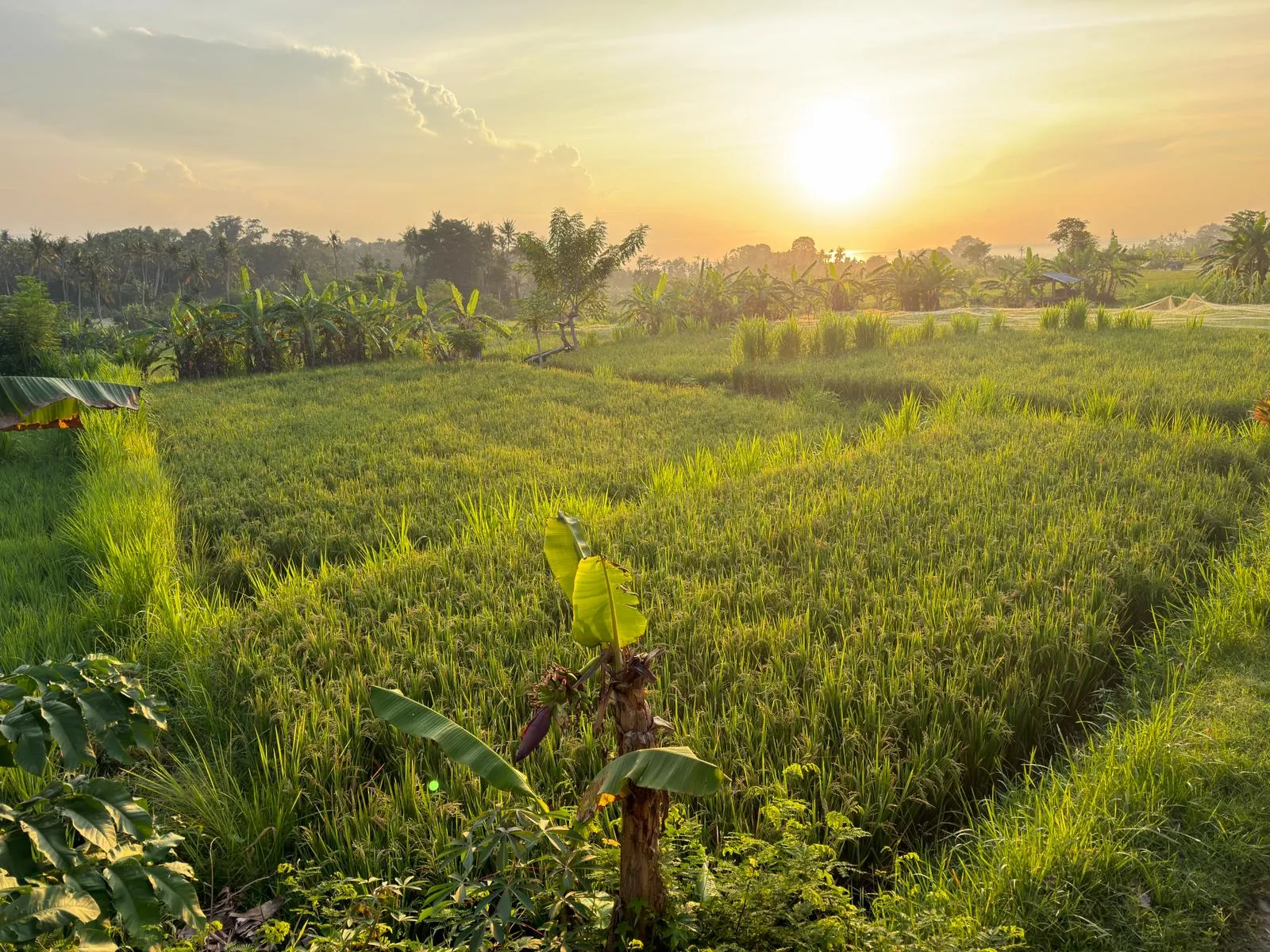
The rainy season in Southeast Asia — roughly May to October across most of the region — is not a wall of water. It’s not grey skies for weeks. It’s not huddling in a hostel waiting for it to stop. What it actually is: a two-hour downpour in the afternoon, almost always predictable, almost always spectacular, followed by the freshest, cleanest air you’ve ever breathed, a sky washed into colours that dry season never produces, and an entire landscape turned so green it looks like someone adjusted the saturation.
It’s also 30 to 60 percent cheaper. And the temples are empty. And the beaches have space. And the waterfalls are actually flowing instead of the sad trickle you’d find in February.
This is the trip everyone talks you out of. Let’s talk you back into it.
What the monsoon actually looks like
The word “monsoon” does a lot of damage. It conjures floods, cancelled flights, biblical rain. And yes, there are places and moments where it gets serious — September in Bangkok can flood streets, and some island ferries shut down in heavy storms. But across the vast majority of Southeast Asia, for the vast majority of the rainy season, what you actually get is this: a clear, warm morning. Sunshine until early afternoon. Clouds building around two or three o’clock, dramatic and towering. Then rain — heavy, tropical, the kind that drums on tin roofs and turns gutters into rivers. It lasts an hour, sometimes two. Then it stops, the sun comes back, and the evening is cool, fresh, and beautiful.
That’s most days, in most places, for most of the season. The rain is a feature, not a bug. It breaks the heat. It clears the dust. It makes everything smell like earth and jasmine and wet stone. Experienced travellers don’t avoid the monsoon — they plan around it. Wake early, see the sights in morning sunshine, take shelter for the afternoon rain with a bowl of pho and an iced coffee, then head out again for golden-hour temples and night markets in air that’s ten degrees cooler than it was at noon.
And here’s the part that nobody mentions: the dry season in much of Southeast Asia, particularly March and April, is brutally hot. Forty degrees in Bangkok. Forty-two in the Mekong plains. The kind of heat that doesn’t just make sightseeing unpleasant — it makes it dangerous. The rainy season brings temperatures back to a comfortable 28 to 32 degrees. You can actually walk.
The money argument
This is where the case gets hard to argue against. Southeast Asia is already one of the cheapest regions on earth to travel — and in the rainy season, it costs roughly half what it does in peak months.
Flights from Europe and North America drop 20 to 40 percent between May and October. Hotels that charge $80 a night in January offer the same room for $35. Guesthouses that are fully booked six months ahead in December have walk-in availability in July. Even the street food stays the same price — which is to say, almost nothing — but you’re eating it without fighting for a plastic stool at the night market.
A comfortable mid-range day in Thailand — decent hotel, mix of street food and sit-down restaurants, transport, a temple or two — runs about $40 to $70 per person in the green season. That same day costs $80 to $120 in high season. Vietnam is even cheaper: $25 to $50 a day covers everything, including meals that would cost ten times more in any European capital. Cambodia and Laos sit lower still.
The savings compound fast. A three-week trip through two or three countries that might cost $3,500 in January can come in under $2,000 in June — same routes, same experiences, better weather for walking, and far fewer people between you and the things you came to see.
Thailand — the east coast trick
Here’s something the travel industry doesn’t advertise loudly: Thailand doesn’t have one rainy season. It has several, and they hit different coasts at different times.
The west coast — Phuket, Krabi, Koh Phi Phi, Koh Lanta — catches the southwest monsoon from May to October. These are the places you probably should avoid in peak wet months. The seas get rough, some resorts close, and the rain is heavier and more persistent than elsewhere.
But the east coast tells a completely different story. Koh Samui, Koh Phangan, and Koh Tao sit in the Gulf of Thailand, sheltered from the southwest monsoon. Their wettest months are actually October to December — meaning they’re at their driest and most pleasant from February through September, right through the period when everyone thinks “Thailand = rain.” You can be on a pristine beach with clear water and sunshine in July while the Phuket crowd is checking weather radar.
Northern Thailand is another revelation. Chiang Mai and Chiang Rai get rain, but less than the south, and the landscape transforms. Rice paddies flood into brilliant green mirrors. The mountains surrounding the city disappear into low cloud in the morning, then emerge in sharp afternoon light. The temperature drops to a comfortable mid-twenties. Cooking classes, temple visits, night markets — everything that makes Chiang Mai exceptional works just as well in the wet season, without the tourist density that makes December feel like a theme park.
Bangkok takes the monsoon head-on, but it’s a city built for rain. Covered markets, shopping malls, rooftop bars with retractable awnings — the infrastructure assumes afternoon downpours. The Grand Palace, Wat Pho, and Wat Arun are all best visited in the morning anyway, which is usually dry and bright. By the time the rain arrives, you’re under cover with a plate of pad kra pao and a Chang, watching the sky put on a show.
Vietnam — the country that breaks all the rules
Vietnam stretches over 1,600 kilometres from north to south, and its weather doesn’t follow a single pattern. This is the country that makes “avoid Southeast Asia in the rainy season” genuinely bad advice, because somewhere in Vietnam, the weather is good at any time of year.
Central Vietnam — Hoi An, Da Nang, Hue — is dry and warm from May through August, which is precisely when the rest of the region is supposedly off-limits. The beaches are gorgeous. The ancient town of Hoi An, usually clogged with tourists in winter, has breathing room. Tailors who need three days for a suit in December can do it in one. The lanterns still glow over the Thu Bon River, but the photographs don’t have forty strangers in the background.
The north — Hanoi, Ha Long Bay, Sapa — is warmer and wetter from May to September, but the rain follows the Southeast Asian pattern: afternoon bursts, clear mornings. Ha Long Bay in light mist, with the limestone karsts emerging from low cloud, is arguably more atmospheric than the postcard-blue version. Sapa’s rice terraces turn impossibly green from June onward, in the exact period that the trekking trails have the fewest hikers.
The south — Ho Chi Minh City, the Mekong Delta — rains from May to November, but the city barely slows down. Saigon’s energy is climate-proof. The covered markets, the coffee shops, the rooftop bars — they all assume rain. The Mekong Delta’s floating markets keep operating, and the lush green of the waterways in wet season is something the dry months can’t match.
Data on your phone matters more in Vietnam than almost anywhere. The script is unfamiliar to most visitors, addresses follow a numbering system that’s hard to decode on foot, and the best food is found in places with no English signage at all. A working phone with maps and a translation app turns a confusing walk into an adventure. Without it, you’re guessing — and in a country this good, guessing means missing things.
Bali — the plot twist
Here’s the fact that unravels the entire “avoid Southeast Asia in summer” narrative: Bali’s dry season runs from April to October. The months that are “rainy season” on the mainland are peak dry season on the island. Blue skies, low humidity, the best surf conditions of the year, and rice terraces in their full green glory.
May and June in Bali sit in a sweet spot — dry weather, pre-peak crowds, and prices that haven’t yet climbed to the July-August highs that come with European and Australian school holidays. Ubud’s terraces are vivid and lush. Uluwatu’s clifftop temple catches the kind of sunset light that people fly halfway around the world for. The surf at Canggu and Padang Padang is consistent and clean.
The digital nomad crowd knows this already. Canggu’s cafés and co-working spaces are busy year-round, but in May and June the ratio shifts — fewer holiday tourists, more people who’ve chosen to be there because the conditions are perfect. Seminyak’s beach clubs are open but not overcrowded. Nusa Penida, the island off the southeast coast with its dramatic cliffs and manta ray snorkelling, is accessible without the boat-queueing chaos of August.
Beyond Bali, the broader Indonesian archipelago opens up. Komodo National Park, Flores, the Gili Islands — all in their dry season, all less crowded than Bali, all connected by short flights or fast boats. Indonesia has over 17,000 islands, and the overwhelming majority of visitors only see one of them. The green season is when the adventurous ones discover the rest.
Cambodia — Angkor in the rain
There are two versions of Angkor Wat. The dry-season version is the one you’ve seen in photographs: ochre stone against blue sky, tour buses in the car park, a thousand people arranged in front of the reflecting pool at sunrise, each trying to get a shot without other tourists in it.
The rainy-season version is the one that made explorers lose their breath. The jungle presses in, vivid and close. Moss and lichen turn the stone green and grey and ancient. The moats are full and still, reflecting the towers with mirror precision. Clouds build behind the spires in the afternoon, and when the rain comes, it empties the courtyards. You stand under a stone gallery that’s been standing for nine hundred years, listening to water pour off the roof, and you are — for once — alone with it.
Cambodia’s wet season runs from May to October, with September and October being the heaviest months. May through August is the window — rain most days, but in manageable afternoon bursts, and the rest of the time is warm, green, and spectacularly uncrowded. Siem Reap’s restaurants and bars are quieter, the tuk-tuk drivers have time to chat, and the temple complex feels less like a tourist attraction and more like what it actually is: one of the most extraordinary things humans have ever built.
Phnom Penh, Cambodia’s capital, has a gritty energy that rain only amplifies. The riverfront comes alive in the evening after the day’s downpour clears. The Royal Palace gleams. The street food stalls along the Tonlé Sap river bank set up as normal — a tarp overhead is all the infrastructure the monsoon requires.
The waterfalls, the surf, the festivals
Some things only exist in the rainy season. Southeast Asia’s waterfalls — the big, cinematic ones that appear on Instagram and in guidebooks — are at their best from June to October. In the dry season, many are reduced to a trickle that doesn’t justify the hike. Erawan Falls in Thailand, Ban Gioc Falls on the Vietnam-China border, Kuang Si Falls near Luang Prabang in Laos — all of them are thundering, mist-throwing spectacles in the wet months and disappointing photo ops in the dry ones.
Surfing follows the monsoon too. The southwest swell that brings rain to Thailand’s west coast also brings the best waves to Indonesia — Bali, Lombok, and Mentawai are pumping from May to September. Siargao in the Philippines catches reliable swells from July to November. For surfers, the rainy season isn’t a compromise — it’s the whole point.
And then there are the festivals. The Rocket Festival in Laos and northeast Thailand marks the start of the rains — villages launch homemade rockets into the sky to encourage the monsoon. Buddhist Lent (Vassa) begins in July across Thailand, Myanmar, and Laos, with ceremonies, candlelit processions, and a three-month period of spiritual retreat that’s central to local culture. Boat races at the end of the monsoon in Laos and Cambodia are riotous, colourful, and almost entirely attended by locals. These aren’t events staged for tourists. They’re the real thing, and they happen because of the rain, not despite it.
What to eat when it’s raining
Rain and Southeast Asian food are made for each other. The afternoon downpour creates the exact conditions under which a bowl of soup becomes transcendent — steaming broth, the sound of water on the awning, the warmth spreading from your hands through your whole body.
In Vietnam, pho needs no introduction, but it tastes different when you’re eating it in a plastic chair under a tarpaulin while rain hammers the street outside. In Thailand, tom yum goong — hot and sour prawn soup — is the rainy-day dish, and every street stall makes their own version. Cambodia’s kuy teav, a pork and noodle breakfast soup, costs about a dollar and will anchor your entire morning.
The night markets don’t stop for rain. In Chiang Mai, the Saturday and Sunday walking street markets overflow under tarps and umbrellas. In Hanoi, the Old Quarter’s food stalls keep grilling and frying regardless of what the sky is doing. In Bali — where it’s dry season, remember — the night markets in Gianyar and Denpasar are at their liveliest from May to August.
The rule across the region: follow the smoke, sit where the locals sit, point at what looks good, and expect to pay between one and four dollars for a meal that would cost fifteen in any Western city. Rain or shine, the food alone justifies the flight.
Practical tips for the green season
Pack light and pack smart. Quick-dry fabrics over cotton — cotton stays damp for hours in tropical humidity, synthetic dries in thirty minutes. A compact rain jacket or packable poncho takes up almost no bag space, though you can buy disposable ponchos everywhere for under a dollar. Waterproof sandals for daily walking, one pair of closed shoes for temples. A dry bag for electronics. Mosquito repellent with DEET — the rain creates standing water, and mosquitoes follow.
Check weather apps daily. Modern forecasts for Southeast Asian cities are surprisingly accurate hour by hour. You can see exactly when the afternoon rain will arrive and plan accordingly. This is where having data on your phone stops being convenient and starts being genuinely useful — checking the radar at noon, seeing that the rain hits at 2 p.m. and clears by 4 p.m., and adjusting your afternoon around it.
Build flexibility into your itinerary. The rainy season rewards slow travel — staying two or three nights in a place instead of one, so that if a day is wetter than usual, you have a buffer. This is better travel anyway. You see more when you stay longer and rush less.
Book domestic flights with cancellation flexibility. Most low-cost carriers in the region (AirAsia, VietJet, Lion Air) offer cheap fares with changeable dates. Weather disruptions are rare but possible, and a flexible ticket costs a few dollars more but saves real stress.
An IbiPoint eSIM simplifies the connectivity question entirely. Instead of buying local SIM cards in each country — finding the carrier shop, producing your passport, waiting for activation, discovering the coverage is patchy — you activate one eSIM before you leave home and it works across every country in the region. Weather radar, maps, translation, Grab, restaurant lookups — all live from the moment you clear immigration. In a region where the best experiences involve wandering off the main road and into places with no English signage, a phone that works isn’t a luxury. It’s how you find the things worth finding.
The green season state of mind
There’s a moment, usually around the third or fourth day, when something shifts. You stop checking the weather app and start reading the sky instead. You learn the rhythm — morning light, midday heat, the clouds building, the drop in air pressure that means rain in twenty minutes, the downpour, the relief, the golden hour that follows. You stop treating the rain as an interruption and start seeing it as part of the day, the same way breakfast is part of the day.
And then you notice what the rain gives you. The temples without crowds. The guesthouse owner who has time to sit with you and tell you about the village festival next week. The waterfall at full thunder. The rice terraces so green they don’t look real. The sunset after a storm, when the sky goes through every colour it knows.
Southeast Asia in the dry season is a well-oiled tourism machine. It works, it’s beautiful, and it will take your money with a smile. Southeast Asia in the rainy season is something more honest — a region going about its life, growing its rice, celebrating its festivals, feeding its people, and letting you in on all of it for a fraction of the price and with none of the queues.
The rain is warm. The food is ready. The temples are empty. Go now — while everyone else is still waiting for the forecast to change.
Thailand eSIM Vietnam eSIM Indonesia eSIM Cambodia eSIM
Planning a Southeast Asia trip? Talk to IbiPoint Support — we’ll help you pick the right plan for your route so you can focus on the pho.