
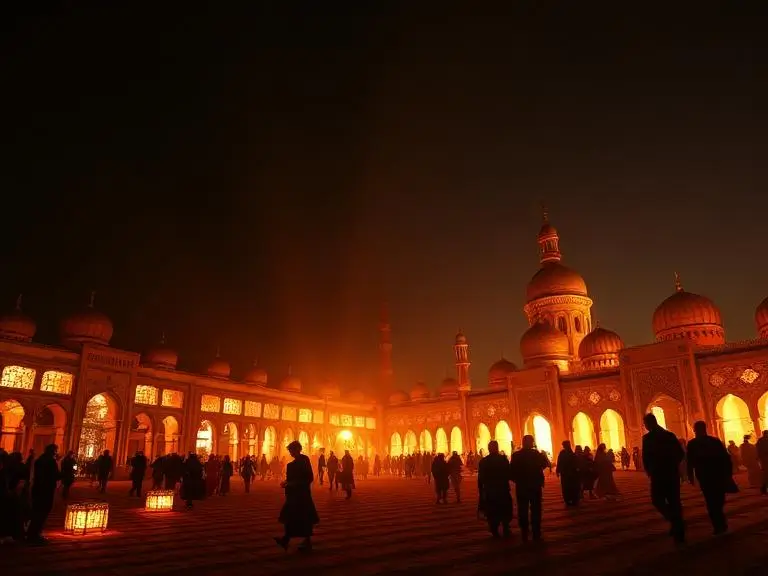
The sun drops behind the minaret. A cannon fires — or a siren sounds, or an app pings, depending on where you are. And then, all at once, an entire city exhales.
Tables appear on pavements. Families spill out of doorways. Strangers pass dates to strangers. The smell of soup and fresh bread fills streets that were quiet just moments ago. This is iftar — the meal that breaks the fast — and if you’ve never experienced it as a traveller, you’re missing one of the most extraordinary things the world has to offer.
Ramadan is the holiest month in the Islamic calendar. For roughly 30 days, Muslims around the world fast from dawn to sunset — no food, no water, no exceptions. It’s a month of reflection, discipline, prayer, and community. And for travellers willing to adjust their rhythm, it’s also one of the most beautiful times to visit the Muslim world.
Why travel during Ramadan at all?
There’s a version of travel advice that says: avoid it. Come back another month when everything’s “normal.” That advice misses the point entirely.
Ramadan doesn’t shut a country down. It transforms it. The daytime is quieter, slower, more contemplative — and then the evening becomes something electric. Night markets stretch until the early hours. Special Ramadan dishes appear that you won’t find the rest of the year. Mosques glow with extra prayers. Generosity is everywhere — literally, in the form of free meals laid out on public tables for anyone who passes by.
You don’t have to be Muslim to appreciate this. You just have to be curious, respectful, and willing to let a place show you something different from the version in the guidebook.
The golden rule: respect the rhythm
You’re not expected to fast. Nobody will ask you to. But in most Muslim-majority countries, the respectful thing to do is avoid eating, drinking, and smoking in public during daylight hours. Not because it’s the law in every country — in many, it isn’t — but because it’s considerate. The people around you haven’t had a sip of water since before dawn. Meeting them halfway is just good manners.
In practice, this is easier than it sounds. Eat breakfast at your hotel. Carry a water bottle and drink discreetly. Save your big meal for the evening — when the whole city is eating with you anyway.
In more cosmopolitan cities like Dubai, Istanbul, and Kuala Lumpur, plenty of restaurants stay open during the day — many behind screens or in designated areas. Having mobile data means you can check what’s open in real time rather than wandering and hoping.
Where Ramadan comes alive for travellers
Morocco during Ramadan is a sensory masterclass. The medinas of Fez and Marrakech transform after sunset — stalls appear selling harira soup, chebakia pastries, and fresh juices. The atmosphere is festive and communal, and the hospitality towards visitors is remarkable.
Turkey blends the sacred and the social with effortless grace. In Istanbul, the historic Sultanahmet district hosts enormous public iftars. The Bosphorus at sunset during Ramadan — with mosques lit up on both sides of the strait — is one of the most beautiful urban views on earth.
Indonesia — the world’s largest Muslim-majority nation — brings its own flavour to Ramadan. In Java and Sumatra, communal meals called buka puasa bersama are everywhere. The energy is warm, inclusive, and deeply social. In Bali, where the population is mostly Hindu, life carries on as usual — which makes Indonesia an interesting two-in-one destination during the holy month.
Jordan offers a quieter, more introspective Ramadan. Visiting Petra or Wadi Rum with fewer tourists and a different energy is something special. And Oman — often overlooked — is one of the most welcoming countries in the Gulf, with a Ramadan atmosphere that feels genuinely inviting rather than performative.
Wherever you go during the holy month, IbiPoint keeps you connected across 200+ countries. No roaming fees, no SIM card queues — just data that works from the moment you land.
What changes — and what doesn’t
Expect shorter business hours during the day. Government offices, banks, and some shops may open later and close earlier. Tourist attractions usually keep their schedules, though some may adjust slightly. Public transport runs as normal in most countries.
What changes most is the energy. Mornings are slow and calm. Afternoons can feel hushed. And then from sunset onwards, everything shifts. Streets fill up. Markets open. Families go out. In many cities, Ramadan evenings have a festive, almost carnival-like atmosphere that lasts well past midnight.
This is where reliable data makes a real difference. Opening times change. Some places that are usually open aren’t. Some places that are usually closed come alive. Having your phone connected means you’re never guessing — you’re checking live information, reading reviews, and navigating in real time.
The iftar invitation
If you’re lucky enough to be invited to an iftar — whether at someone’s home, a public table, or a mosque — say yes. This is one of the most genuine, generous dining experiences you’ll ever have.
The fast is traditionally broken with dates and water, followed by soup, then a larger meal. The food varies by country — in Egypt, expect ful medames and kunafa. In Turkey, pide bread and lentil soup. In Malaysia, the Ramadan bazaars are legendary, with hundreds of stalls selling everything from nasi lemak to kuih. In Morocco, the table groans with harira, briouats, and sweet mint tea.
You don’t need to bring anything. You don’t need to know the right words. Just show up, be grateful, and eat. That’s the whole point.
Practical tips for Ramadan travel
Dress a little more conservatively than you might otherwise — not because of strict rules, but because the month has a more reflective tone and it’s a simple way to show respect.
Book accommodation with breakfast included, so you don’t have to worry about finding food during the day. If you’re an early riser, some hotels offer suhoor (the pre-dawn meal) — it’s a fascinating experience in itself.
Be patient with service. Your waiter hasn’t eaten or had water all day. The taxi driver hasn’t either. A little grace goes a long way.
And set up your eSIM before you leave. During Ramadan, SIM card shops at the airport may have shorter hours or longer queues. With an IbiPoint eSIM installed on your phone before departure, you land connected — maps, translation apps, live opening times, all working from step one.
After sunset, everything glows
There’s a moment, just after iftar, when an entire city seems to sigh with relief and happiness. Families pour into the streets. Children run between market stalls. The call to tarawih prayer echoes across rooftops. Lanterns and lights turn ordinary streets into something that feels enchanted.
This is the Ramadan that doesn’t make it into the headlines. The one you only see if you go. The one you’ll tell people about for years.
And it’s happening right now — in the medinas of Tunisia, in the alleyways of Cairo, on the streets of Jeddah, under the minarets of Istanbul. All you need is a plane ticket, an open mind, and a phone that works when you get there.
Heading to the Muslim world during Ramadan? Talk to IbiPoint Support — we’ll help you pick the right plan so you can focus on the experience.