
eSIM Montenegro — the honest data guide, from the Bay of Kotor to Durmitor
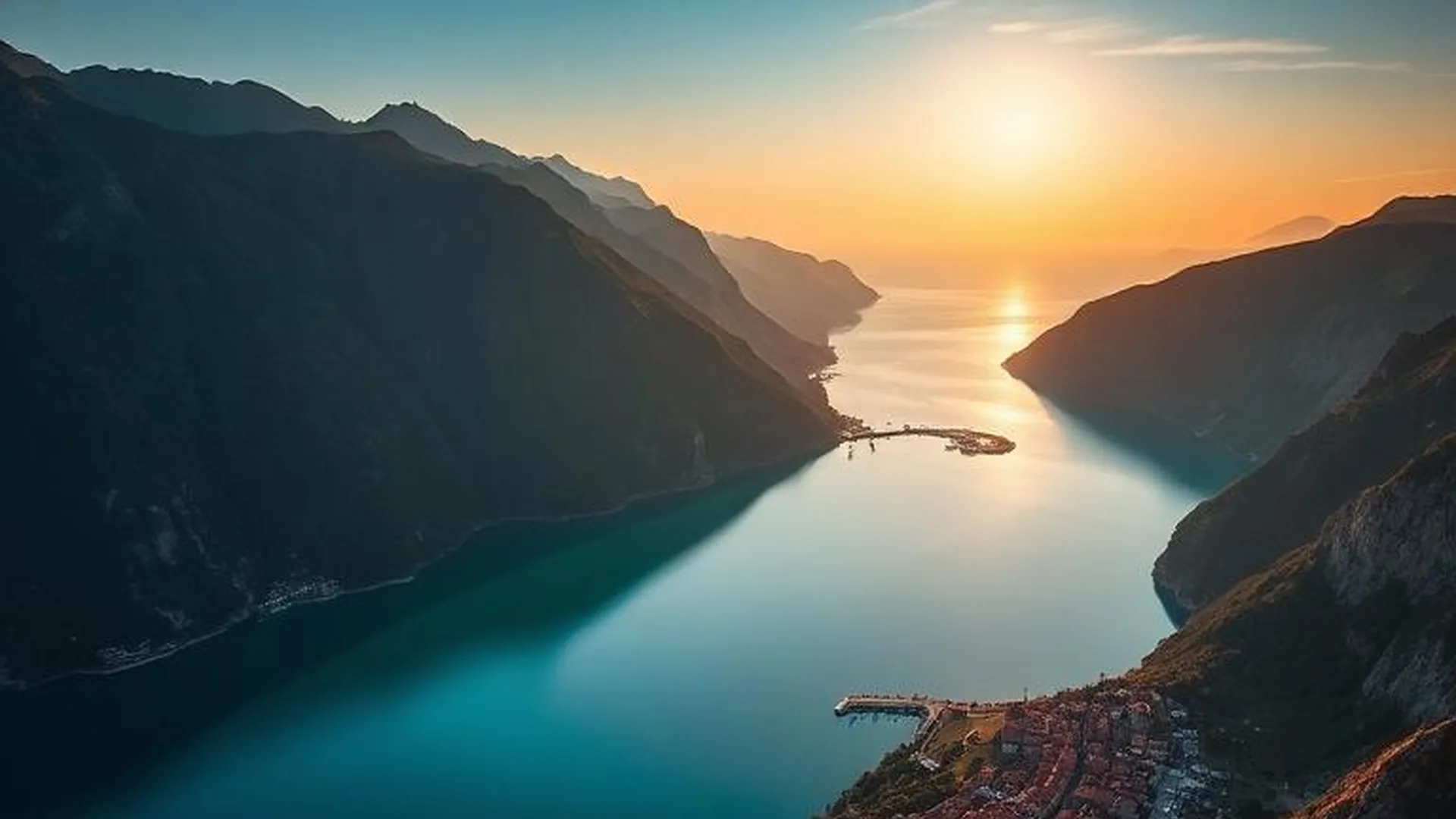
Montenegro is a small country carrying three landscapes. There’s the Bay of Kotor, where the Adriatic reaches inland like a fjord and Venetian walls climb the mountainside above the old town. There’s the riviera — Budva’s beaches, the islet of Sveti Stefan — where the coast turns bright and busy. And there are the mountains: Durmitor’s peaks and the Black Lake, the Tara river running through one of the deepest canyons in Europe. Distances look tiny on the map, then the roads start winding, and you realise you’ll be moving through all three worlds in a single week — which is exactly when the small practical things start to matter.
This guide is about one of them: arriving with your data already sorted, and understanding how much you’ll actually lean on it the moment you leave your hotel — for a serpentine drive, a boat across the bay, a day in the canyon. The real question isn’t marketing, it’s practical: how much data does a day in Montenegro really burn, where is the network strong and where does it honestly thin out, and which of two simple shapes fits your trip? And there’s one catch specific to Montenegro that surprises almost everyone travelling with a European phone plan. Let’s start there.
The roaming catch: euro country, EU rules don’t follow
Montenegro pays in euros. The menus, the road signs, the holiday feel — everything says Europe. But Montenegro is not in the EU, and the roam-like-at-home package that has quietly covered you across the whole continent stops at the border. Cross from Dubrovnik into the Bay of Kotor mid-drive and your data switches from “included” to charged roaming — often the first you hear of it is a warning message that arrives after you’ve already been online.
The honest picture: some home plans have started adding Western Balkan zones or reduced rates, and the region has its own roam-free arrangement — but that covers local plans within the Balkans, not the plan you brought from home. Brussels is working on folding the Western Balkans into the EU roaming area, and Montenegro is tipped to be among the first — but until your operator confirms it in writing, assume the border still matters. So check what your plan actually says about Montenegro before you assume anything. Or skip the guessing entirely and treat Montenegro the way you’d treat any long-haul destination: with a travel eSIM priced for the country itself, so the question simply disappears.
How much data a day in Montenegro really takes
Start from an ordinary day, because it sizes everything else. Maps open on the serpentines and between towns; WhatsApp and messages all day; photos of the bay — and the occasional video — going home to family or up on social; some browsing over dinner; maybe a call or two over the internet. Add it up and a sightseeing day usually stays comfortably under a gigabyte. It climbs if you upload a lot of video, stream live, or share your connection with a laptop for work, and streaming films in HD is the one thing that genuinely devours data — which, on a trip like this, you rarely do.
That rough number is the whole decision, because it maps cleanly onto two honest shapes. If you’d rather never count, there’s a daily portion that refills every morning. If you’d rather know your total up front, there’s a fixed amount you set against the length of your trip. Same network, same coverage — just two ways of paying for it, and the rest of this guide is about picking the one that fits.
Staying connected, from the Bay to the Black Lake
The practical truth: in the places where you’ll actually spend your days — Kotor, Budva, Tivat, Herceg Novi, Podgorica, and the coastal corridor between them — the local network gives you fast, dependable 4G/LTE and 5G, and coverage holds well through the towns and the tourist routes. More than enough for navigation, messages, and sharing everything you photograph.
Where it honestly thins out is exactly where you’d expect: on the high mountain roads, along stretches of the Tara canyon, on Durmitor’s hiking trails, and in the tunnels that stitch the coast to the interior. Download your offline maps before a canyon day or a mountain hike, and let those hours be what they should be — a deliberate disconnection.
The bigger everyday win is the hotel wifi one. Wifi in coastal hotels and apartments is often slow, shared across the whole building, and patchy the moment you step onto the terrace — fine for an evening photo upload, frustrating for anything live. Your own eSIM sidesteps all of it: it’s your connection, not two hundred other guests’, and it comes with you — onto the boat across the bay, up the cable car, into the mountains. That’s the case for doing the whole thing with one single eSIM instead of hunting for a local SIM after you arrive. One IbiPoint eSIM for Montenegro covers your whole trip with one installation, and there are two shapes to choose from.
If you’d rather never watch a meter, Unlimited Flex is the calm choice — a daily portion of high-speed data that refills every morning, and when the day’s portion is spent you slide onto a steady, always-on backup speed instead of being cut off, plus IbiPoint TopUp to extend your days whenever a trip runs longer than planned. It’s built exactly for this open kind of travel, when you’re on maps and messages all day across the bay, the coast and the mountains and simply don’t want to think about it — and the daily portions range from light to genuinely heavy, if your days are full of video. And if you want a bigger daily portion still, our sister shop e-eSIM.com carries higher-tier unlimited plans too.
If you’d rather know exactly what you have, a Montenegro Data Pack is the direct choice — a fixed amount of high-speed data with a clearly defined validity, and IbiPoint TopUp to add more along the way instead of starting over. One honest tip that saves a wasted window: a plan’s validity usually starts at the first connection to the network, not at purchase, so install ahead but let it connect when you actually land — that way your 7, 15 or 30 days count from the day the trip begins. And if your route reaches beyond Montenegro — flying into Dubrovnik, a day trip to Albania, a wider Balkan loop — the regional Balkans plans cover the whole stretch on one eSIM, in every size from a light week to a full month, so a multi-country trip stays as simple as a single-country one.
Whichever you pick, the mechanics are the same and pleasantly boring: after purchase, you tap the install link or scan the QR code that arrives by email. It sets up in a couple of minutes, and your usual SIM stays in the phone for calls and texts. One thing is worth a look first — the activation moment differs from plan to plan, so check your plan’s details before installing and line the timing up with your trip. Hotspot and sharing are supported where the local network allows it, and a near-real-time usage summary with IbiPoint Transparency shows you exactly how much you’ve used, day by day.
Good to know before you go
Getting there and around. Podgorica (TGD) and Tivat (TIV) are the direct gateways, and plenty of travellers fly into Dubrovnik and drive across instead — a beautiful approach, but leave margin for the border queue in high summer. You drive on the right, the coastal road moves slowly in July and August, buses link the towns well, and a rental car is what unlocks the mountains. Kotor is also a major cruise stop, which makes the bay wonderfully lively by day and quietly yours again in the evening.
Entry. Many nationalities enter visa-free for stays of up to 90 days while others need a visa — rules differ, so check the current requirements for your passport before you travel, keep your passport valid well beyond your stay, and have onward travel and accommodation details handy for arrival.
Money and pace. The currency is the euro — adopted unilaterally, which is the same quirk behind the roaming catch: euro country, not EU. Cards work in hotels and restaurants along the coast, but carry cash for small konobas, market stalls, mountain huts and parking. Prices are gentler than the scenery suggests, and the pace is unhurried — dinner is an event, not a transaction.
Sort your eSIM before the trip. Buy it ahead so everything is ready — then check your plan’s activation details, because they decide the smart moment to install or switch it on. Some plans are best installed early and left to connect when you land; others are set up on arrival. Get that timing right and there’s no SIM hunt at the airport and no local paperwork with a transfer waiting — just data ready when you need it.
One trip, one eSIM
Montenegro works best when the practical things disappear. The bay narrows until the mountains stand straight out of the water; the Black Lake holds Durmitor upside down on a still morning; the Tara runs far below the bridge, absurdly green. However far you get, there’s always more than one itinerary can hold, and getting the practical things right — arriving connected, keeping your data simple from the bay to the mountains — is exactly what leaves you free to actually be there.
Sort the connection once, before you fly — the right plan picked, ready to switch on when you land — then put the phone away and look up, at the walls, the water, the canyon. Montenegro is best tasted with your hands free.
Planning a Montenegro trip, or pairing it with Dubrovnik, Albania, or a wider Balkan route? Talk to IbiPoint support — we’ll help you choose between an Unlimited Flex plan and a single Data Pack for your trip.