
Italy eSIM — the month Italy gives itself back
Italy has 61 UNESCO World Heritage sites, more than any other country on earth. China has sixty, Germany fifty-five. And the month most visitors pick to go and see them is August — which is the month Italians themselves are trying to get out of.
That is the whole argument for October, and everything below follows from it. The country is not quieter in autumn because it has been abandoned. It is quieter because it has stopped performing and gone back to work.
The month the country comes back
August in Italy is not the country at full volume. It is the country on holiday from itself. Ferragosto falls on the fifteenth, and the weeks around it empty the cities from the inside: the family-run places put a handwritten sign on the door and go to the coast, the workshops shut, and what is left in Florence and Rome is the monuments, the heat, and everyone who flew in to look at them.
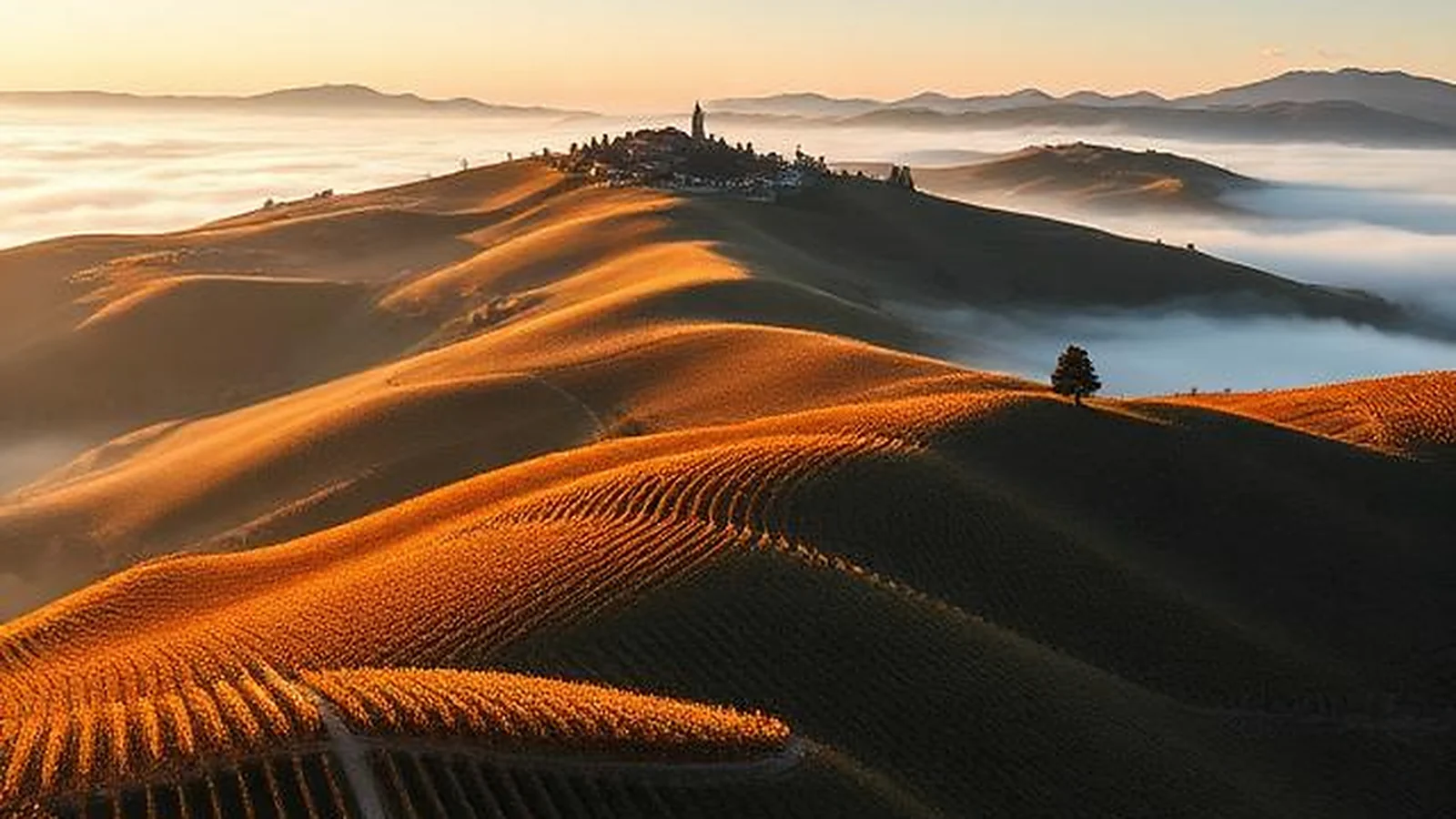
October reverses all of it. The shutters go up. The people who cook the food you came for are back behind the stove. The queue at the Uffizi becomes a queue rather than a siege. The light goes long and low and sits on the stone in a way that August’s overhead glare never manages, and the temperature turns into something you can walk around in all day without planning your life around shade.
The honest part, because there is a trade and it is not a free lunch: some coastal resorts start winding down, a few island ferry timetables thin out, and how much of that you notice depends on how far south you go. Cities, hill towns and countryside are straightforwardly better in October. A beach club in Sardinia is not.
Italy eSIM plansHarvest is a season, not a metaphor
October is when Italy is actually producing, and that is not a figure of speech. It changes what is in the fields, what is on the menu, and what the town you are standing in is doing that weekend.
The vendemmia — the grape harvest — runs through the north from late summer into October, and Piedmont and Tuscany spend the month smelling of it: fermenting fruit, wet oak, tractors on roads built for carts.
In Alba, the International White Truffle Fair runs from 10 October to 6 December, with the truffle market at its centre: dealers, small scales, careful little cloths, and a smell that gets into your coat and stays there for the drive home. Go on a weekday if you want to hear yourself think.
Further south the olives come in through October and November — Puglia, Sicily, Calabria — and the new oil that follows them is a different substance from the thing in the supermarket bottle, green and peppery enough to make you cough, which locals treat as a feature.
And everywhere, all month, the sagre: village festivals built around a single ingredient, a chestnut, a mushroom, a wine nobody exports. There is almost certainly one within half an hour of wherever you are staying on any given weekend, and they are the least touristed thing in the country for the simple reason that nobody advertises them outside the province.
In the mountains, the larches in the Dolomites turn. They are the conifer that does, which is why those slopes go gold in October instead of staying green, and why the range — UNESCO-listed, and geologically a coral reef that ended up three thousand metres in the air — walks better now than at any other time of year.
What Bologna has never served you
Here is the honest correction, and it is a useful one at dinner. Spaghetti bolognese is not an Italian dish.
The real thing is ragù alla bolognese, and it is served with fresh egg tagliatelle — broad and flat, made to carry a meat sauce that spaghetti simply sheds onto the plate. The Accademia Italiana della Cucina registered the recipe with Bologna’s chamber of commerce in 1982 and lodged an updated version in 2023, which tells you roughly how relaxed the city is about the subject. The spaghetti version looks like an export that never came home: its first documented appearance is in an American cookbook from 1917.
The wider rule is worth more than the anecdote. Italy is not a cuisine. It is about twenty regional cuisines that share a flag and argue permanently, and the single best ordering strategy in the country is to eat what is in front of you rather than what you have heard of — the four Roman pastas in Rome, pizza in Naples, tagliatelle in Emilia, and in October, whatever the sagra down the road has built itself around.
This is also the month that rule pays best, because autumn menus follow what came out of the ground that week rather than what the freezer can support in August.
Your trip, uninterrupted
Italy has one specific trap that catches visitors more reliably than any other, and it deserves its own paragraph. Almost every historic centre has a ZTL — a zona a traffico limitato — marked by a sign that means nothing to most foreign drivers and watched by a camera. There is no barrier and nobody waves you down. Drive in without a permit and the first you hear of it is a fine arriving months later through your rental company, and one wrong turn into a medieval one-way system can set off several. Navigation that knows where the zones are is not a nicety here.
The rest is ordinary and constant: the trains, where the app holds the ticket and, more usefully, tells you what the delay actually is; the timed entry now standard at the Uffizi, the Vatican Museums and the Colosseum; the restaurant you booked in a village of four hundred people; and the camera pointed at a handwritten menu somewhere nobody has any particular reason to speak English.
Inside the EU your own plan travels with you and none of this costs extra. Outside it — most British plans since Brexit, American, Swiss — it does not, and the roaming line on the next bill is its own kind of surprise.
That is the part IbiPoint quietly takes care of. Your eSIM arrives by email in seconds, QR code included, installed and ready before you have packed — your regular SIM stays active for calls and texts, and the eSIM carries the trip on fast 4G/LTE and 5G. Pick your shape on the Italy plans page — a Data Pack if you know roughly what you use, an Unlimited Flex if you would rather not count, with TopUp whenever you want more and near-real-time Transparency so you always know where you stand.
And if the trip keeps going — Italy touches France, Switzerland, Austria and Slovenia, and the Alps are a morning’s drive from Milan — the Europe plans carry the whole continent on a single eSIM. Keep going.
Book the shoulder, not the summer
Here is the practical shape of it. Early October still behaves like late summer in the south, where the sea holds its heat well past the point the calendar suggests, while the north is properly autumn and the mountains can turn cold overnight. Pack for both, because a single week can easily contain both.
Book two things ahead and improvise the rest. The truffle-fair weekends fill Alba and everything around it, so if Piedmont is on the list, the bed comes first. And the big timed-entry museums still sell out in October — less violently than in July, but they sell out, and standing in the wrong queue in Rome is a way to lose an afternoon you will not get back.
Then leave room. The best thing about Italy in autumn is that the country has gone back to being itself, and the parts of it worth finding — the sagra you drive past, the cellar that is open because it is harvest, the trattoria with eleven tables and no website — are not the parts you can book in advance. Order your IbiPoint eSIM tonight, it is ready before you fly, and then go and get pleasantly lost in a country that spent August waiting for you to leave.
Italy eSIM plansPlanning a trip to Italy? Talk to IbiPoint support — we’ll help you choose between an Unlimited Flex plan and a single Data Pack for your trip.