
Philippines eSIM — 7,641 islands and the art of the hop
There are 7,641 of them. That is not a rounded figure: the country resurveyed its own coastline in 2016 and found roughly five hundred islands it had not counted before. A nation can misplace five hundred islands. That tells you something.
It also tells you the shape of the trip. You do not tour the Philippines, you hop it — a small plane, a fast ferry, an outrigger with a diesel engine and no schedule worth the name. The distance between two places is never the point. What matters is whether the sea agrees with you today. Get used to that and the country opens. Fight it and you will spend three weeks annoyed in some of the best water on earth.
Palawan, where the water stops looking real
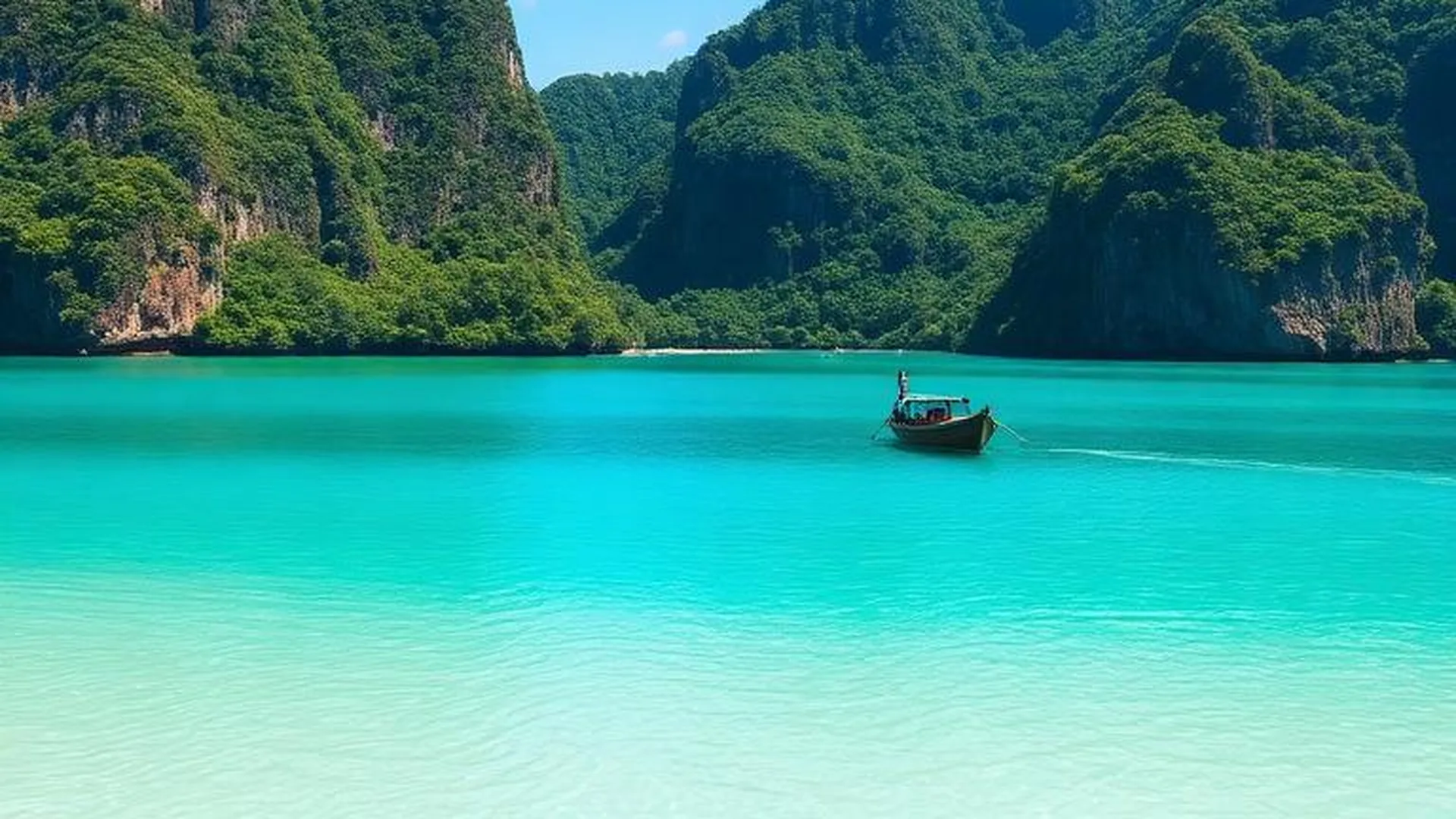
Start at El Nido, on the northern tip. Bacuit Bay is a scatter of limestone towers rising straight out of green water, and the lagoons are hidden inside them — you paddle through a gap in the rock barely wider than the boat and come out in a pool of still turquoise with cliffs closing overhead.
The town itself is busy and a bit scruffy. The bay is not. Take the boat, be on the water by eight, and let the day sort itself out.
Then go north to Coron, where the attraction is underneath. A Japanese supply fleet was sunk here by air attack in September 1944 and never moved, so a dozen wrecks now sit in warm, clear water at depths that suit ordinary divers rather than only the very experienced. Above the surface, Kayangan Lake sits in a bowl of rock reached by a short, steep climb, and is routinely called the cleanest lake in the country.
Between the two lies the reason people keep coming back: a chain of small islands where the boat stops for lunch, and the lunch is grilled fish on a beach with nobody else on it.
Philippines eSIM plansBohol, Siargao, and the one to get right
Bohol has the Chocolate Hills: more than a thousand conical mounds spread across the middle of the island, green in the wet months and, in the dry, the colour that named them. Nobody is entirely sure how they formed. Standing on the viewpoint at dawn, that feels correct.
The same island has tarsiers, which are among the smallest primates alive and are wound tight as a watch spring. They are nocturnal, they are stressed by noise and flash, and a sanctuary that keeps you quiet and at a distance is doing its job properly, not being precious.
Siargao, east of everything, is the surf island: Cloud 9 is the famous break, but the rest of the coast is palms, motorbikes and lagoons, and it stays low-key in a way the guidebooks keep predicting will end.
And then the one worth getting right. Oslob, on Cebu, guarantees whale sharks, and it guarantees them by feeding them — which keeps the animals in the bay year-round and changes behaviour that took the species a very long time to learn. Donsol, further north, does not feed anything: the sharks pass through on their own schedule between roughly December and May, and some days you see nothing. Go to Donsol. Accept the possibility of nothing.
North, where the islands stop being the point
Fly to Luzon and drive up into the Cordilleras and the whole country changes register. The rice terraces here are cut into mountainsides at angles that look impossible, held by walls that have been repaired by hand for as long as anyone can trace.
One honest correction, because almost everything gets it wrong: the terraces on the postcard, at the roadside viewpoint above Banaue, are not the ones UNESCO listed. The listing covers five clusters elsewhere in Ifugao, and the finest of them is Batad — a natural amphitheatre of terraces you reach on foot, which is exactly why it looks the way it does.
You will also read that they are two thousand years old. Recent archaeology puts them a great deal younger, and the argument is unresolved and genuinely interesting. Either way, they are still farmed, which is the part that should impress you.
Your trip, uninterrupted
All of it runs on one small, invisible thing: being connected without ever thinking about it. The ferry that changed its departure and told you by message. The map that finds the guesthouse down an unnamed lane in El Nido. The video call from a boat between islands that simply works, on fast 4G/LTE and 5G, across the country.
That is the part IbiPoint quietly takes care of. Your eSIM arrives by email in seconds, QR code included, installed and ready to go before you have even packed — your regular SIM stays active for calls and texts, and the eSIM carries the trip.
Pick your shape on the Philippines plans page — a Data Pack or an Unlimited Flex, with TopUp whenever you want more and near-real-time Transparency so you always know where you stand. And our sister store e-eSIM.com carries higher-tier unlimited plans for the Philippines as well. The details live in the shop. The feeling lives on the water.
And if the trip keeps going — Vietnam, Thailand, Malaysia, Singapore, Indonesia — the Asia plans carry all of them on a single eSIM. Keep going.
Go in the dry months
Here is the honest timing, and it is the whole reason this is a planning piece rather than a packing one. Right now is the tail of typhoon season, which runs roughly June to November and peaks in the middle of that. The country is green and cheap and half empty, and the weather can also cancel your week.
The dry season opens around December and holds until May, with January to April the reliable heart of it. Book for then. The practical part is small: the peso is cash-heavy once you leave the cities, domestic flights and ferries want booking a few days ahead in high season, and something will still change on the day.
So pick your weeks and get the boring part done. Order your IbiPoint eSIM tonight and it is ready before you finish packing. The islands are not going anywhere. The sea will decide the rest, and it always has.
Philippines eSIM plansPlanning a trip to the Philippines? Talk to IbiPoint support — we’ll help you choose between an Unlimited Flex plan and a single Data Pack for your trip.