
Serbia eSIM — the honest guide to unlimited data, from Belgrade to the border
Serbia is a country you drive. You start with coffee on a Belgrade rooftop where the Sava meets the Danube, trace the vineyards and baroque calm of Novi Sad, drop into the green gorges of the Drina and Tara, climb to the pine air of Zlatibor, and roll south past monasteries toward Niš — a country that unfolds at whatever pace you give it. This guide is about the small thing that quietly makes that journey easier: arriving with your data already sorted, and understanding what “unlimited” data actually means once you’re moving from city to canyon to border.
Unlimited — “unbegrenzt” — is the word every eSIM shop leans on, and the one most of them are least honest about. So here’s the plain version: where the network is strong, where it honestly thins, how an unlimited plan really behaves across a day, and how to pick the right shape for a Serbia trip without overthinking it.
Why Serbia rewards a road trip
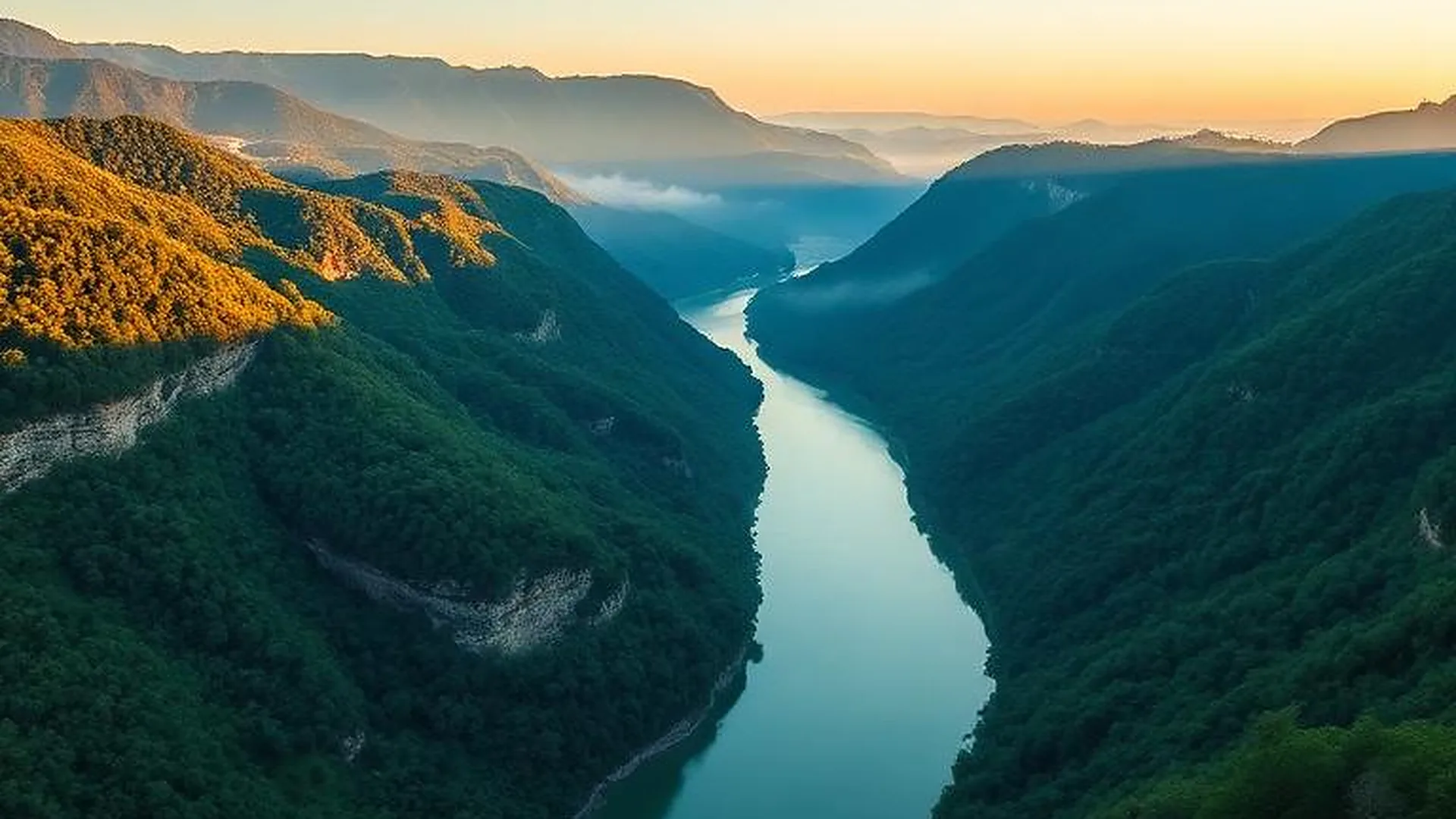
Few countries pack this much variety into a single loop. Belgrade is the loud, warm overture — riverside barges, the fortress above two rivers, a café on every corner. An hour north, Novi Sad and the Petrovaradin fortress slow the tempo; west and south, the land folds into the Drina and Tara canyons, the emerald river you can raft, and the highland calm of Zlatibor with its narrow-gauge Šargan Eight railway looping through the hills. Further south, Niš and a string of monasteries carry centuries in their walls.
It’s a driving country, and that’s the whole point for data. The rhythm is always the same: dense, well-connected towns, then long stretches of road, gorge and open highland where connection is a different story. Understanding that split is the entire trick to sizing your data — and to knowing when “unlimited” matters and when it simply doesn’t.
What “unlimited” honestly means
Here’s the mechanic, spelled out plainly. An Unlimited Flex plan gives you a daily ration of high-speed data — you choose how much, from a light 500 MB a day up through 1 GB, 2 GB and beyond. Use that ration, and you’re not cut off; you drop to a steady reduced speed for the rest of the day, then the high-speed allowance resets the next morning. That’s it. No overage bill, no dead phone — just full speed until your daily amount is used, then a slower, always-on backup.
The honest part competitors skip is what that reduced speed is and isn’t. It’s comfortably enough for maps, messaging, calls over the internet and email — the things you actually lean on between stops. It is not for streaming films in HD. So “unlimited” here means genuinely never cut off, not “infinite high-speed forever” — and once you know that, the daily tiers make choosing easy.
Staying connected, Belgrade to the border
The practical truth: across Serbia’s cities and main routes — Belgrade, Novi Sad, Niš, Kragujevac, the Zlatibor resorts — the local network gives you fast, reliable 4G/LTE, and coverage follows the motorways and the Belgrade–Niš corridor well, so long drives stay connected almost the whole way. More than enough for navigation, messages and sharing everything you photograph.
Where it honestly thins is where you’d expect: deep in the Drina and Tara canyons, on the smaller mountain roads, and in the quieter far south. Download your offline maps before a day in the gorges or a hike in the highlands, and let those hours be what they’re meant to be — a deliberate disconnect.
The nice part is doing all of this with a single eSIM instead of hunting for a local SIM on arrival. One IbiPoint eSIM for Serbia covers your whole trip from a single install, and there are two shapes to choose from.
If you’d rather never watch a counter, Unlimited Flex is the calm choice — the daily high-speed ration described above, with a reduced-speed backup so you’re always online, and IbiPoint TopUp to extend the days whenever a trip runs longer than planned. It’s built for exactly this kind of open-ended travel, where you’re on maps and messages all day and simply don’t want to think about it. And if you want a bigger daily allowance for heavier use or a longer stay, our sister store e-eSIM.com carries higher-tier unlimited plans as well.
If you’d rather know precisely what you hold, a Serbia Data Pack is the direct choice — a fixed amount of high-speed data with a clearly defined validity, and IbiPoint TopUp to add more data along the way rather than starting over. And the moment your route crosses borders — a Balkan loop through Bosnia, Montenegro or North Macedonia — a regional Balkans plan covers the whole run on one eSIM and adds 5G where the local networks carry it, so a multi-country trip stays just as simple as a single-country one.
Whichever you pick, the mechanics are the same and pleasantly boring: after buying, you tap the install link or scan the QR code that arrives by email. It sets up in minutes, and your usual SIM stays in the phone for calls and texts. One thing worth checking first — activation timing varies by plan, so look at your plan’s details before you install and time it to suit your trip. Hotspot and tethering are supported where the local network allows it, and live usage tracking with IbiPoint Transparency shows you exactly what you’ve used, day by day.
Good to know before you go
Getting there and around. Belgrade’s Nikola Tesla Airport (BEG) is the main gateway, with Niš (INI) a handy second door to the south. Inside the country a fast rail line now links Belgrade and Novi Sad in well under an hour, intercity buses reach almost everywhere, and the roads are made for a self-drive loop — just leave room for the scenic detours, like the Šargan Eight railway or a slow morning in the canyons.
Entry. Many nationalities enter Serbia visa-free for short stays, and others need a quick permit — rules change, so check the current requirements for your passport before you travel, and keep your accommodation details handy for arrival.
Money and pace. The currency is the Serbian dinar (RSD); cards work in hotels, restaurants and larger shops, but keep some cash for markets, kiosks and the smaller places. If your loop crosses borders, remember the neighbours run their own money — euros in Montenegro, the mark in Bosnia, the denar in North Macedonia — another reason a regional data plan keeps things simple. And leave space in the plan; Serbia rewards the afternoon you didn’t schedule.
Sort your eSIM before you travel. Setting it up ahead of time means it’s installed and ready to go — no queue for a SIM at the airport, and no local paperwork when you land.
One trip, one eSIM
Serbia is a country of thresholds — a plain door in a Belgrade courtyard that opens onto rakija and slow conversation, a mountain road that tops a ridge and drops toward a green river, a monastery quiet that swallows the noise of the drive. However far you go, there are always more of them than an itinerary can hold, and getting the practical things right — arriving connected, keeping your data simple from the city to the border — is exactly what leaves you free to actually be there.
Sort the connection once, before you fly, then put the phone away and follow the river road. Serbia is best tasted with your eyes up.
Planning a Balkan loop from Belgrade to the border? Talk to IbiPoint support — we’ll help you choose between an Unlimited Flex plan and a single Data Pack for your trip.