
South of France eSIM — the month the light turns gold
Painters did not move to Provence for the beaches. They came for one thing, and they said so constantly: the light. Van Gogh wrote home about it from Arles like a man who had found a new colour. Cézanne spent decades painting the same mountain over and over, chasing the way it changed by the hour.
Here is what nobody puts in the brochure: that light is at its very best in September. The harsh white glare of August softens into something warm and low and generous, the cicadas finally stop, the grapes come in, and the whole south exhales. The crowds go home the same week it gets good.
The month the south keeps for itself
September is the local secret and it is barely a secret at all — everyone who lives here knows it and nobody who visits in August finds out. The sea is at its warmest now, after a whole summer of heating up. The markets are back to being markets instead of scrums.
It is harvest, too. The vendange starts, tractors full of grapes hold you up on back roads, and every village seems to have something on. You will eat better in September than you would have in July, at half the wait.
One honest note, because everyone asks: the lavender is already cut. The fields went purple in early summer and by now they are neat rows of stubble. What you get instead is the smell still hanging around the distilleries, vines turning colour, and light that makes even the stubble look composed.
France eSIM plansProvence, where the light was invented
Start in Arles, where the streets Van Gogh painted are still recognisably the streets Van Gogh painted. A Roman arena in the middle of town, plane trees, shuttered facades in faded gold and dusty pink, and a café terrace at dusk that feels like a slightly worn quotation.
East of there, Sainte-Victoire rises out of the plain, pale and angular. Cézanne painted it more than eighty times and never quite finished with it. Drive the road around its base in the late afternoon and you will understand the obsession within about ten minutes.
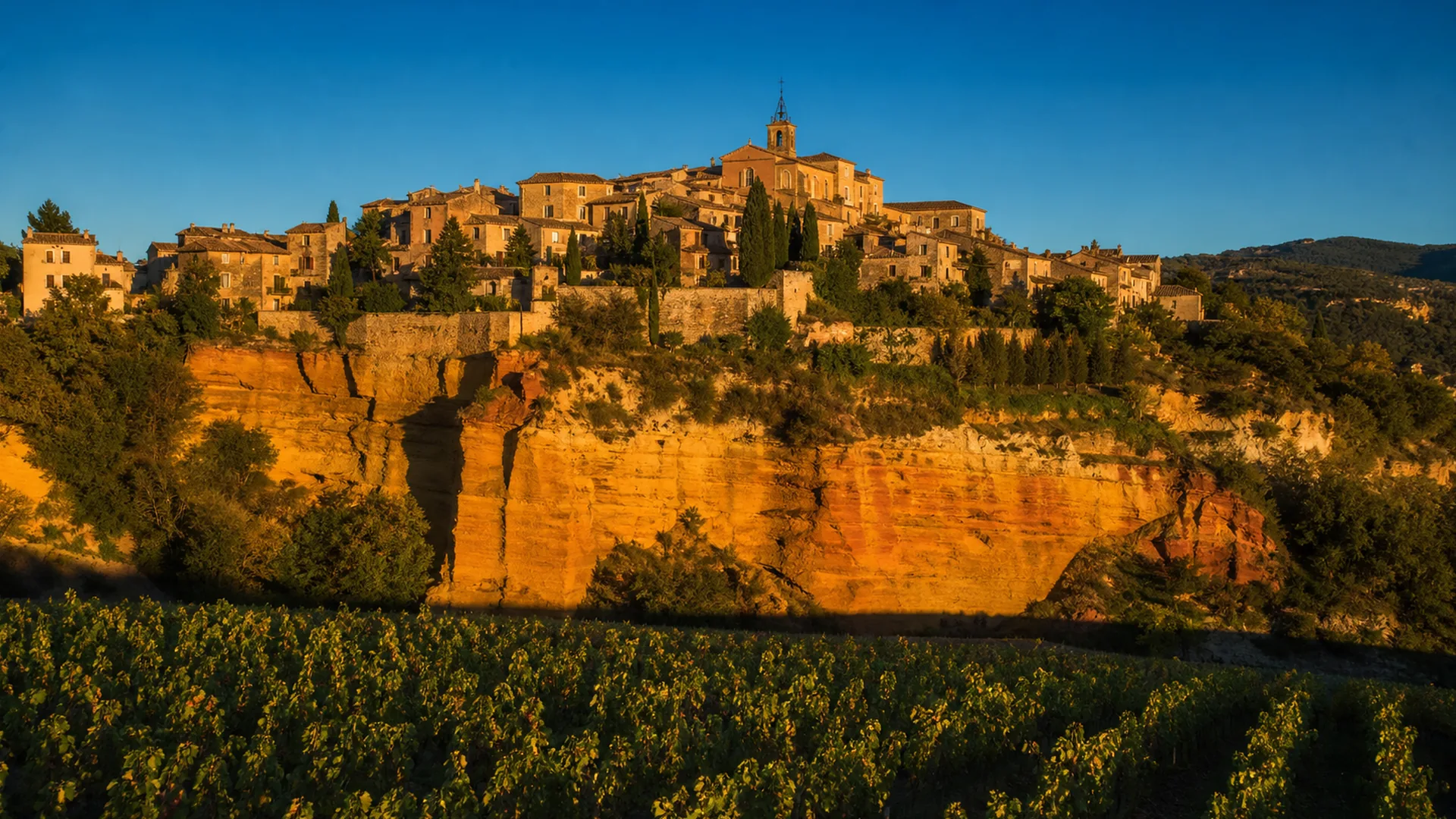
Then up into the Luberon. Gordes is stacked on the side of a rock in dry stone, the whole village facing the valley like an audience. Roussillon is the opposite: built out of the ochre it stands on, every wall somewhere between amber and burnt red, with old quarry paths running through pigment cliffs behind the village.
Between them are the hill villages nobody writes about — a fountain, a plane tree, four old men playing pétanque, someone selling melons from the back of a van. This is the part of Provence that stays with people.
Gorges, plateaus and back roads
An hour east, the land cracks open. The Verdon runs through a limestone canyon in a green so vivid it looks chemical, walls rising hundreds of metres on either side, and a road along the rim with viewpoints where you will stop far more often than you planned.
At the western end the gorge opens into a lake, and above it Moustiers is wedged under a cliff with a gilded star hanging on a chain strung between two rock faces. Nobody entirely agrees who put it there or why. That feels appropriate.
Further west and south the country changes again. The Camargue flattens into salt and marsh, with white horses, pink flamingos and a wind that never quite stops. Mont Ventoux stands over the whole region, bald and pale on top, visible from absurd distances.
Take the small roads. September in the south rewards the day where you leave with a rough plan, stop for lunch at two, and arrive somewhere else at seven with no idea how it took that long.
Your summer, uninterrupted
All of it runs on one small, invisible thing: being connected without ever thinking about it. The table booked from a viewpoint. The map that finds the road down to the gorge. The video call from a village square that simply works, on fast 4G/LTE and 5G, across the region.
That is the part IbiPoint quietly takes care of. Your eSIM arrives by email in seconds, QR code included, installed and ready to go before you have even packed — your regular SIM stays active for calls and texts, and the eSIM carries the trip.
Pick your shape on the France plans page — a Data Pack or an Unlimited Flex, with TopUp whenever you want more and near-real-time Transparency so you always know where you stand. And our sister store e-eSIM.com carries higher-tier unlimited plans as well. The details live in the shop. The feeling lives on the back roads.
And if the trip keeps going — over the border into Italy, a few days in Barcelona on the way home — the Europe plans cover more than 30 destinations with one eSIM. Keep driving.
Go before the light goes
September has a deadline built into it. The days are already shortening, the golden hour creeps earlier each evening, and by the end of October the shutters start closing on the villages for winter. This particular version of the south lasts about six weeks.
The practical side is small: euros and cards everywhere, a hire car is the whole point, and the motorway tolls add up so take the departmental roads anyway. Book the good restaurants a day or two ahead — September is quiet, not empty.
Which leaves one decision: where to start. Order your IbiPoint eSIM tonight and it is ready before you finish packing. The mountain has not moved since Cézanne. The grapes are coming in this week. And the light is doing the thing it only does now.
France eSIM plansPlanning a trip south? Talk to IbiPoint support — we’ll help you choose between an Unlimited Flex plan and a single Data Pack for your trip.