
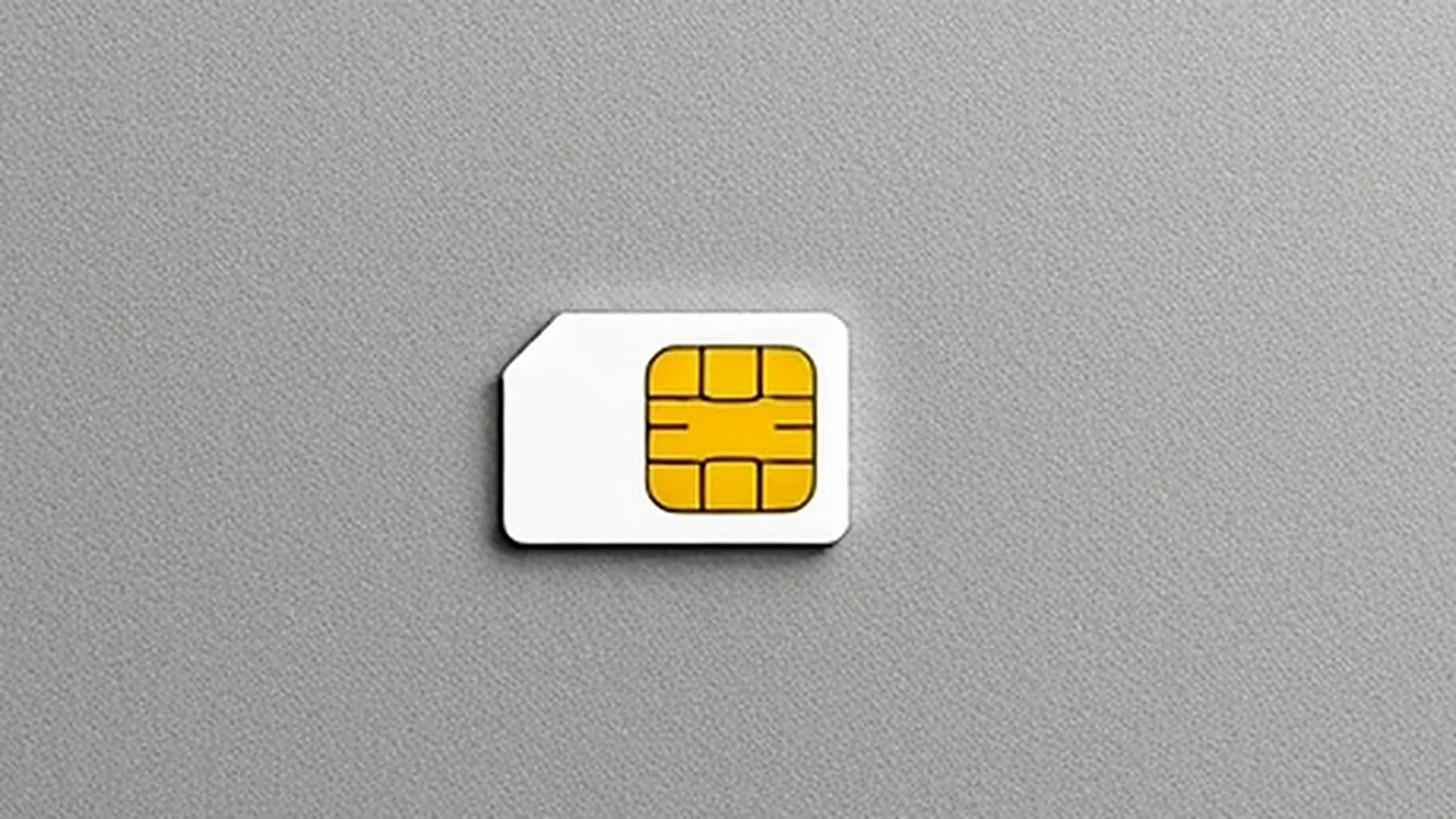
The end of the SIM tray — why the same phone is two different machines
Somewhere in the last few years the SIM card stopped being something you handle and became something your phone has already decided about on your behalf. If you have not bought a handset recently you may have missed how far this has gone, and how strangely uneven it is.
This autumn it moved another step. It is worth knowing exactly which step, because nearly everything written about it overstates the case.
What actually changed this autumn
Apple’s first foldable, the iPhone Duo, was announced on 9 September and reaches buyers on 23 October. It has no SIM tray. Not a tray that happens to be missing in certain countries — no tray in any market on earth, including mainland China, where physical SIM cards are still the overwhelming preference. For a mainstream phone, that is new.
Alongside it, the iPhone 18 Pro and 18 Pro Max are eSIM-only in twelve markets: the United States, Canada, Mexico, Japan, Guam, the US Virgin Islands, Bahrain, Kuwait, Oman, Qatar, Saudi Arabia and the United Arab Emirates. Everywhere else, the United Kingdom and the rest of Europe included, they still have a tray. That is the same list as last year’s iPhone 17 Pro. On the ordinary models, nothing changed at all.
And one thing did not happen this year: there is no standard iPhone 18. Apple has split its release schedule, so the plain iPhone 18, the 18e and a second-generation iPhone Air are now expected in spring 2027. If you have been waiting since September for the non-Pro model to turn up, that is why.
Global eSIM plansThe tray is not dying — that is the part everyone gets wrong
The headline version of this story is that the SIM card is finished. It is not, and the exceptions are more interesting than the trend.
Samsung still fits a nano-SIM tray to its flagships, including in the United States — the very market where Apple and Google removed theirs. The Galaxy S26 line, on sale since March, pairs one physical SIM with one eSIM. The largest Android manufacturer in the world simply did not follow.
Google followed, but in one country only. The Pixel 11 is eSIM-only in the United States and keeps its tray everywhere else. And the foldable in that range, the Pixel 11 Pro Fold, keeps the physical SIM even in the United States — the exact opposite of what Apple did with its own foldable. Two companies, the same year, the same form factor, opposite conclusions.
So there is no industry rule here. Anyone who tells you the tray is gone is describing the shelves in one country. What is actually happening is a patchwork, settled market by market and sometimes model by model, and it is going to stay untidy for years.
The trap is where you bought it, not what you bought
This is the part that catches travellers out. Two iPhone 18 Pro handsets can sit side by side — same colour, same storage, same software, same everything on screen — and one has a tray while the other does not, because one was bought in New York and the other in Berlin.
Nothing in the settings announces this, and the model number on the box is not something most people think to check. A phone bought abroad, a phone bought secondhand, a phone handed down in the family: any of those can be the other kind without anyone involved realising it.
The check itself takes five seconds. Look along the long edge of the phone for a pinhole and a faint seam. No pinhole, no tray. Do it now rather than at an airport.
It matters because an eSIM-only phone removes an escape hatch you may have been quietly relying on: walking into a shop on arrival and buying a local SIM card. On a phone with no tray that option only exists where the seller supports eSIM and can set it up for you on the spot, which is far from everywhere.
Your trip, uninterrupted
Here is the part the gloomy coverage misses. For a traveller, a phone with no tray is genuinely better than one with a tray — as long as you set it up before you leave home.
On a phone with no tray, your home number is an eSIM as well. The handset stores several profiles and runs two lines at the same time, so your usual number stays reachable for calls and messages while a second profile carries your data abroad. Nothing gets swapped at a boarding gate, and nothing small and easy to lose ends up in a hotel bin.
That second profile is what IbiPoint is for. Your eSIM arrives by email within seconds of payment, QR code included, and installs before you fly — which is the entire point on a phone that has no fallback. It then carries the trip on fast 4G/LTE and 5G.
For a trip inside Europe, the Europe plans put one eSIM across the continent. For anything that crosses continents, the Global plans run on local partner networks in well over a hundred countries. Pick a Data Pack if you know roughly what you use, an Unlimited Flex if you would rather not count, with TopUp whenever you want more and near-real-time Transparency so you always know where you stand.
Done that way, the eSIM-only phone stops being a risk and becomes what it was supposed to be all along: one less small plastic thing to keep track of.
What to do before your next trip
Check the edge of your phone for the pinhole, and check any phone you are travelling with, not just your own. That one look tells you which of the two machines you are carrying.
If there is no tray, install your travel data before you fly. That is sensible advice on any phone and it is not optional on this one.
If there is a tray, you still have both options and none of this is urgent. But the direction is clear enough that your next phone may not offer the choice — and which way it goes will depend on the country you happen to buy it in, not on the phone you think you are buying.
So do the boring part now. Order your IbiPoint eSIM tonight, install it while you are still at home on your own wi-fi, and let the tray question become somebody else’s problem.
Global eSIM plansNot sure which kind of phone you have? Talk to IbiPoint support — tell us the model and where it was bought, and we’ll tell you whether it takes a physical SIM.